


No two recovery journeys are exactly alike. Medications may change, follow-up appointments can increase, and different healthcare providers may become involved as treatment progresses. What begins with a single prescription often becomes an ongoing part of the recovery process that requires organization and clear communication.
Keeping track of prescriptions while managing appointments, daily responsibilities, and limited mobility can become challenging.
A personal injury pharmacy may help simplify prescription management by supporting patients with medication-related questions, prescription services, and delivery options where available.
Having a clear plan for managing prescriptions can help make recovery more organized and easier to navigate across Southern California.
Key takeaway
- Keep an up-to-date medication list, monitor refill dates, and follow your healthcare provider's instructions throughout your recovery.
- Stay organized by saving prescription information, provider contacts, and important medication records in one place.
- Communicate promptly with your pharmacy and healthcare providers if your prescriptions, treatment plan, or pharmacy needs change.
- EZlinkMeds may assist with prescription-related questions, pharmacist consultations, refill support, and delivery for eligible prescriptions within eligible delivery areas.
Building a Medication Plan for Your Recovery
Managing personal injury prescriptions involves more than filling a medication once. A well-organized medication plan includes taking medications as directed by your healthcare providers, keeping prescription information up to date, planning refills before they are needed, and maintaining clear communication with your pharmacy throughout the recovery process.
As treatment progresses, your medications may change based on follow-up appointments, specialist recommendations, or your recovery needs.
Keeping an up-to-date medication list, noting refill dates, and storing important prescription information in one place can make it easier to manage these changes.
Maintaining regular communication with your pharmacy is equally important. If you have questions about your medications, notice changes to your treatment plan, or need assistance with prescription-related services, contacting the pharmacy early can help address concerns before they interrupt your recovery.
Receiving Your First Prescription
The first prescription you receive after an injury may be one of the earliest medication-related steps in your recovery. Taking a few minutes to confirm important details before leaving your appointment can help make the prescription process smoother and reduce unnecessary questions later.
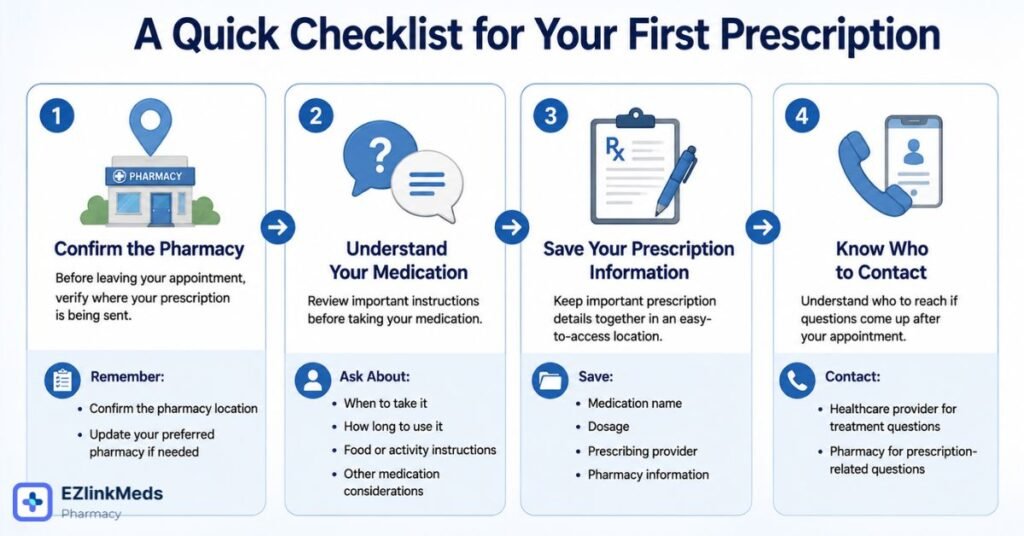
Confirm Where the Prescription Is Being Sent
Before leaving your appointment, verify which pharmacy will receive your prescription. If you prefer a different pharmacy or need to update your preferred location, let your healthcare provider know before the prescription is sent.
Ask About Important Medication Instructions
Make sure you understand how and when to take your medication, how long you may need it, and if there are any special instructions related to food, activities, or other medications.
If any part of your treatment plan is unclear, ask your healthcare provider or pharmacist for clarification before beginning the medication.
Save Your Prescription Information
Keep the prescription name, dosage, prescribing provider, and pharmacy details together in a place that is easy to access. Having this information readily available can be helpful if you need to discuss your medication during future appointments or contact the pharmacy.
Know Who to Contact if You Have Questions
Questions can arise after you return home, especially if your treatment plan changes or you notice something unexpected. Knowing whether to contact your healthcare provider or the pharmacy for different types of questions can help you get the information you need more quickly and keep your recovery on track.
Managing Medications During the First Weeks of Recovery
As your recovery continues, a few simple habits can help keep your medications organized and your treatment plan on track. The following practices may help you manage your prescriptions during the first weeks of recovery.
Create a Daily Medication Routine
Take your medications as directed by your healthcare provider and follow a consistent schedule each day. Setting reminders may help you avoid missed doses.
Monitor Your Medication Supply
Check your medication supply regularly instead of waiting until you have only a few doses remaining. Planning ahead allows more time to address any pharmacy questions or prescription updates before your medication runs out.
Record Any Medication Changes
If a healthcare provider changes your dosage, starts a new medication, or advises you to stop taking one, update your medication list promptly. Keeping an accurate record can help prevent confusion during future appointments.
Bring Your Medication List to Follow-Up Appointments
Bring an up-to-date list of your medications to each appointment so your healthcare providers can review your treatment plan and discuss any necessary changes.
Coordinating Prescriptions From Multiple Healthcare Providers
As your recovery progresses, you may receive prescriptions from more than one healthcare provider. Keeping your medication information organized and sharing updated prescription details with each provider can support a more coordinated approach to your care.
Below are some of the healthcare professionals who may become involved in managing your medications.
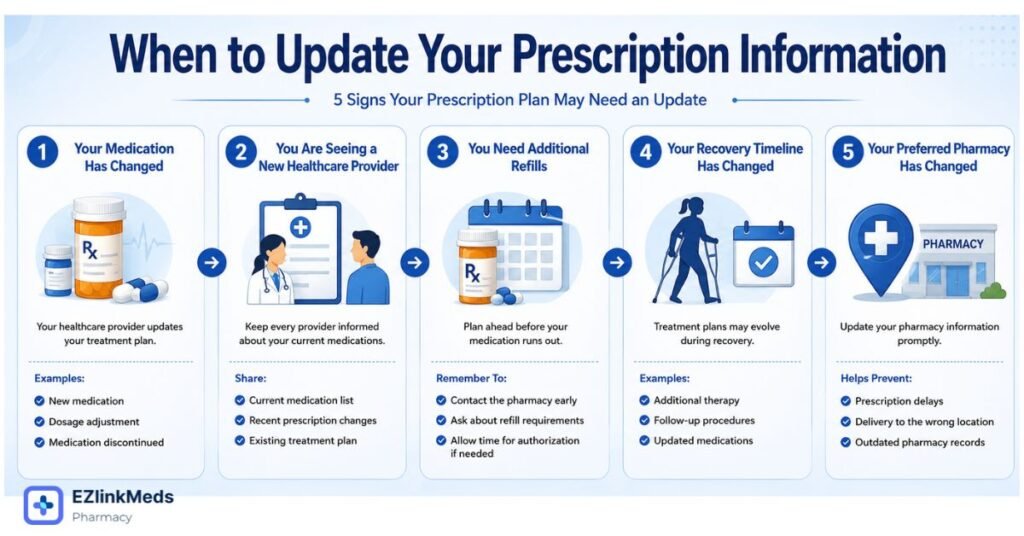
Your Medication Has Changed
Your healthcare provider may change your dosage, prescribe a new medication, or discontinue an existing one as your recovery progresses.
Update your medication list whenever a change is made, and follow the most recent instructions provided by your healthcare provider. If you have questions about a new medication or updated directions, your pharmacist can provide additional guidance.
You Are Seeing a New Healthcare Provider
As additional specialists become involved in your care, such as an orthopedic physician or pain management provider, share your current medication list during each visit. This helps every provider understand your existing treatment plan before prescribing additional medications.
You Need Additional Refills
Some medications may be needed for longer than originally expected. Rather than waiting until you have only a few doses remaining, contact the pharmacy in advance to ask about refill requirements.
This allows time to address any prescription review or prescriber authorization that may be needed before your medication runs out.
Your Recovery Timeline Has Changed
Recovery does not always follow the original schedule. Additional therapy, follow-up procedures, or changes in your treatment plan may also affect your prescriptions. Let your pharmacy know if your healthcare provider updates your medications so your prescription records stay current.
Your Preferred Pharmacy Has Changed
If you decide to use a different pharmacy because of a move, convenience, or changing circumstances, let your healthcare provider know as soon as possible. Updating your preferred pharmacy early can help avoid delays with future prescriptions.
Simple Habits That Can Help Prevent Prescription Interruptions
Small, consistent habits can help keep your prescription plan on track throughout your recovery. Consider the following practices to reduce avoidable interruptions:
✓ Request refills before your medication runs low so there is enough time for any required pharmacy review or prescriber authorization.
✓ Keep your contact information up to date with both your healthcare providers and pharmacy to avoid missed communications.
✓ Ask questions as soon as they arise if you are unsure about your medication, dosage instructions, or changes to your treatment plan.
✓ Check and respond to pharmacy calls or messages promptly in case additional information is needed before your prescription can be processed.
✓ Store medications according to the label or pharmacist’s instructions and keep them securely away from children, pets, excessive heat, moisture, and other unsuitable conditions.
✓ Review your medication list regularly to make sure it reflects your current prescriptions and any recent changes made by your healthcare providers.
✓ Bring your medication information to follow-up appointments so your healthcare providers can review your current treatment and discuss any necessary updates.
How a Personal Injury Pharmacy May Support Ongoing Recovery
Prescription needs may change as recovery progresses, and a personal injury pharmacy can help support patients throughout that process.
Services may include reviewing prescriptions, answering medication-related questions, providing pharmacist consultations, and assisting with refill requests.
When appropriate, the pharmacy may communicate with licensed prescribers to clarify prescription information. If delivery is available for an eligible prescription and location, patients can also discuss the available delivery options with the pharmacy team.
Prescription organization, pharmacist communication, refill planning, and local delivery access are all parts of a broader med-legal pharmacy process. Our guide to med-legal prescription delivery for attorneys, healthcare providers, and injured patients explains how these services can work together across the course of a personal injury matter.
How EZlinkMeds Supports Patients Across Southern California
EZlinkMeds may offer same-day or next-day prescription delivery for eligible prescriptions within eligible delivery areas. Availability depends on prescription review, medication availability, the requested delivery location, order timing, and current pharmacy operations.
EZlinkMeds may be able to assist patients and referral partners in Los Angeles, Glendale, Burbank, Pasadena, Long Beach, Santa Clarita, Thousand Oaks, Westlake Village, Oxnard, Ventura, and nearby communities, subject to pharmacy requirements and service availability. If you have questions about prescription services or delivery availability for your location, the pharmacy team can discuss the options that may be available for your individual circumstances.
Conclusion
An organized prescription plan can make it easier to manage medications alongside follow-up appointments and changing treatment needs. Keeping accurate information and staying connected with your pharmacy helps support a smoother recovery experience.
Contact EZlinkMeds Pharmacy to discuss prescription-related questions, pharmacist consultation, refill support, delivery availability, and other pharmacy services that may apply to your circumstances.