


Successful recovery after an accident depends on more than medical treatment alone. Orthopedic surgeons, pain management specialists, pharmacists, and other healthcare professionals all play a role in helping patients stay on track with their prescribed care plans. When medications are readily accessible and communication remains coordinated, patients are more likely to continue treatment without unnecessary interruptions.
For practices treating personal injury patients, maintaining that continuity can be challenging. Prescription-related delays, transportation barriers, and communication gaps may interrupt medication access and create breaks in care that affect both recovery and clinical documentation.
A coordinated approach connects healthcare providers, specialized personal injury pharmacies, and authorized legal teams to support timely medication access, organized documentation, and consistent communication. Together, these efforts help protect patient compliance while reducing administrative demands on busy orthopedic and pain management practices.
Key takeaway
- Coordinated post-accident care relies on clear communication between orthopedic providers, pain management specialists, pharmacies, and other authorized members of the care team.
- Managing medications across multiple providers helps maintain continuity of care, reduce duplicate therapies, and support consistent treatment throughout recovery.
- Specialized pharmacy coordination can assist with prescription review, pharmacist consultations, communication with licensed prescribers, and organized prescription documentation.
- EZlinkMeds supports orthopedic practices, pain clinics, case managers, attorneys, and injured patients across Southern California with coordinated prescription services, multilingual support, and same-day or next-day delivery where available.
Why Care Coordination Matters After an Accident
Effective post-accident care depends on coordinated communication between multiple healthcare providers, follow-up appointments, prescribed medications, and authorized care teams. Keeping these elements connected helps support continuity throughout recovery while maintaining an organized record of the patient’s treatment.
After an accident, patients often receive care from multiple healthcare professionals, including orthopedic surgeons, pain management specialists, physical therapists, and pharmacists. As treatment progresses, medication changes, follow-up visits, and prescription renewals require consistent communication between providers to help keep the care plan on track.
A coordinated approach helps reduce unnecessary administrative challenges, supports continuity of care, and maintains organized documentation throughout the recovery process. For a broader look at how coordinated post-accident care fits within the larger framework of prescription management, provider collaboration, and med-legal pharmacy operations, see The Complete Guide to Med-Legal Prescription Delivery: Optimizing Pharmacy Operations for Attorneys and Doctors.
The Care Team’s Role Throughout Recovery
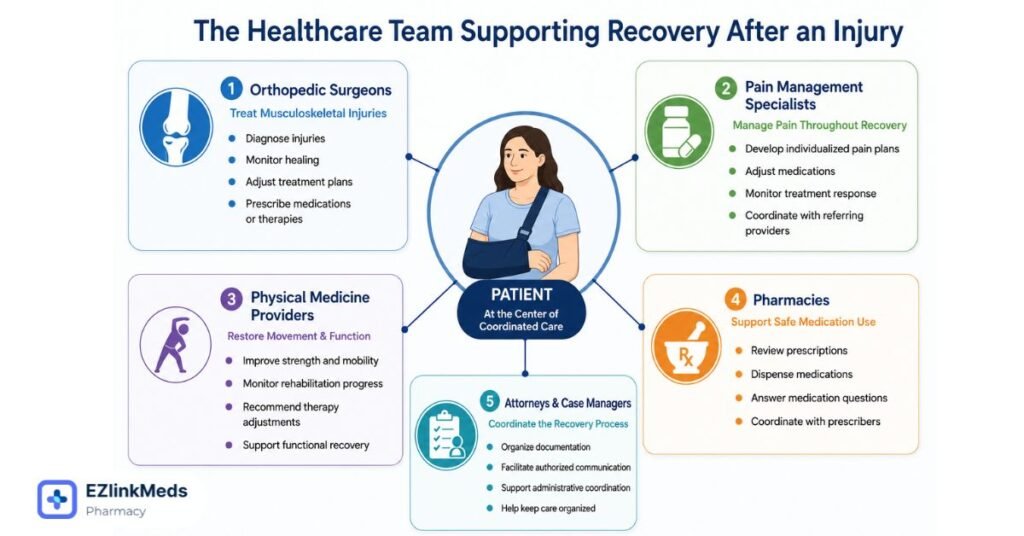
Recovering from an accident often requires coordinated care from multiple professionals, each contributing a different area of expertise. When providers communicate effectively and understand their respective responsibilities, patients are better supported throughout every stage of treatment.
Orthopedic Surgeons
Orthopedic surgeons diagnose and treat injuries affecting the bones, joints, ligaments, tendons, and muscles. They evaluate recovery progress, determine when treatment plans should be adjusted, and prescribe medications or therapies that support healing after fractures, surgical procedures, or other musculoskeletal injuries.
Pain Management Specialists
Pain management specialists focus on controlling pain while supporting long-term function and mobility. They often develop individualized treatment plans using multi-modal pain management, which may include topical anti-inflammatory medications, muscle relaxants, nerve pain medications, and other non-opioid therapies when appropriate.
Ongoing follow-up allows them to assess treatment effectiveness, adjust medications as recovery progresses, and coordinate care with referring physicians.
Physical Medicine Providers
Physical medicine and rehabilitation providers, along with physical therapists when involved, help patients restore strength, flexibility, mobility, and functional independence.
They monitor progress during rehabilitation, identify limitations that may require changes to the treatment plan, and communicate important updates to the patient’s physicians. Their feedback helps guide decisions about activity levels, therapy goals, and continued recovery.
Pharmacies
Pharmacies help ensure prescribed medications are reviewed, dispensed, and explained to patients. They also answer medication-related questions, communicate with prescribers when clarification is needed, and help support continuity when prescriptions are updated or renewed during recovery.
Attorneys and Case Managers
When treatment is related to a personal injury claim, attorneys and case managers may help coordinate communication between authorized parties, organize medical documentation, and assist with administrative matters that support ongoing care.
Their role allows healthcare providers to remain focused on clinical treatment while helping keep the patient’s care process organized.
Common Reasons Treatment Plans Become Disrupted
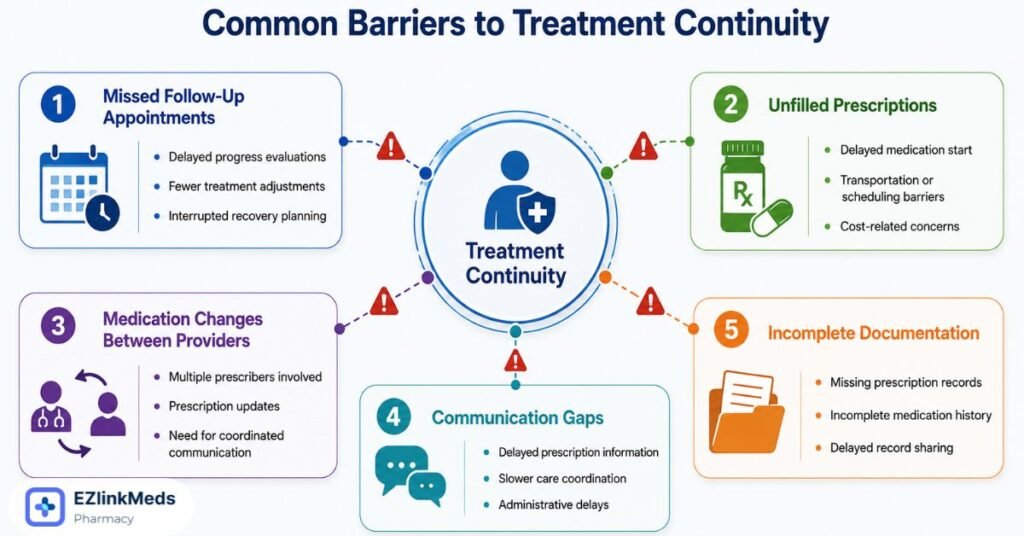
Successful recovery depends on more than a well-designed treatment plan. Even when healthcare providers recommend appropriate medications, follow-up visits, and rehabilitation, everyday challenges can interrupt the course of care.
Recognizing these obstacles early allows providers and care teams to address them before they affect treatment continuity.
Missed Follow-Up Appointments
Follow-up visits allow providers to evaluate healing, monitor symptoms, adjust medications, and determine whether additional treatment is needed.
When appointments are missed, important clinical decisions may be postponed, making it more difficult to maintain an accurate and up-to-date treatment plan.
Unfilled Prescriptions
Prescriptions are often intended to support recovery immediately after an injury or procedure. However, patients may not obtain their medications because of transportation limitations, uncertainty about the prescription process, scheduling conflicts, or concerns about out-of-pocket costs.
When prescribed therapies are not started or are delayed, pain management and rehabilitation plans may become more difficult to maintain, particularly during the early stages of recovery.
Medication Changes Between Providers
Personal injury patients often receive care from multiple healthcare professionals over the course of treatment. As medications are adjusted or new therapies are introduced, clear communication between providers helps reduce confusion, supports medication safety, and promotes continuity across the patient’s care plan.
Communication Gaps
Coordinating care across multiple clinics, pharmacies, and authorized care team members requires consistent communication. Delays in sharing prescription updates, treatment recommendations, or documentation may create unnecessary administrative work and slow the progression of care.
Incomplete Documentation
Accurate documentation helps healthcare providers understand a patient’s treatment history and supports communication between authorized members of the care team.
Missing prescription records, incomplete medication histories, or delayed documentation requests can make it more difficult to maintain a complete picture of the patient’s recovery over time.
How Prescription-Access Barriers Can Affect the Care Plan
A prescribed medication may become part of a patient’s treatment plan before it is dispensed, but the patient cannot begin using it until the prescription has been received, reviewed, and filled by a pharmacy. After an accident, access may be interrupted by transportation limitations, medication availability, incomplete prescription information, uncertainty about payment, or the need for clarification from the prescriber.
Orthopedic and pain management practices may not always know whether a patient encountered a problem after leaving the appointment. Clear communication between the patient, pharmacy, and prescribing office can help identify unresolved questions before they create a longer interruption.
A specialized personal injury pharmacy may also discuss delivery and available billing arrangements for eligible prescriptions. Availability and payment responsibilities depend on the patient’s circumstances, pharmacy requirements, and the terms of any written agreement. These arrangements should not be presented as automatic or as eliminating the patient’s financial responsibility.
Coordinating Medications Across Multiple Providers
Many personal injury patients receive medications from more than one healthcare provider during recovery. An emergency department physician may prescribe medication immediately after the accident, while orthopedic surgeons, pain management specialists, and primary care providers may later adjust the treatment plan as healing progresses. Reviewing prescription information across the care team can help providers identify potential duplication, consider relevant medication history, and keep the patient’s current medication list more accurate.
A coordinated approach typically includes:
- Reviewing emergency department medications to determine whether short-term prescriptions should be continued, modified, or discontinued during follow-up care.
- Integrating orthopedic prescriptions for post-surgical recovery, fracture management, inflammation, or musculoskeletal injuries into the patient’s overall medication plan.
- Coordinating pain management prescriptions as treatment evolves, including non-opioid medications, muscle relaxants, topical therapies, nerve pain agents, and other components of a multimodal pain management regimen.
- Communicating with primary care providers when ongoing medical conditions, existing medications, or long-term follow-up may influence treatment decisions.
- Reviewing the patient’s current medication list so licensed healthcare providers can consider possible duplication, interactions, or conflicting instructions when making treatment decisions.
- Maintaining clear communication between providers and pharmacies so prescription updates, dosage adjustments, and medication changes are accurately reflected throughout the patient’s course of care.
When current medication information is communicated appropriately, licensed providers have a clearer basis for reviewing the patient’s treatment plan, while the pharmacy can process prescriptions using the most recent information it has received.
Helping Patients Stay Engaged With Their Treatment Plan
Active participation is an important part of post-accident recovery. While healthcare providers develop and adjust the treatment plan, patients play a key role by following clinical recommendations and communicating any concerns that arise during the course of care.
Patients can support their recovery by:
- Understanding medication instructions so prescriptions are taken as directed and according to the provider’s recommendations.
- Keeping scheduled follow-up appointments to allow healthcare providers to monitor healing, evaluate progress, and make any necessary treatment adjustments.
- Asking prescription-related questions whenever medication instructions, dosage schedules, or potential side effects are unclear.
- Reporting medication concerns promptly, including unexpected side effects, difficulty taking a medication, or changes in symptoms that may require clinical evaluation.
- Maintaining communication with healthcare providers by sharing updates about their recovery and informing the care team of any changes that could affect the treatment plan.
Communication That Supports Better Patient Compliance
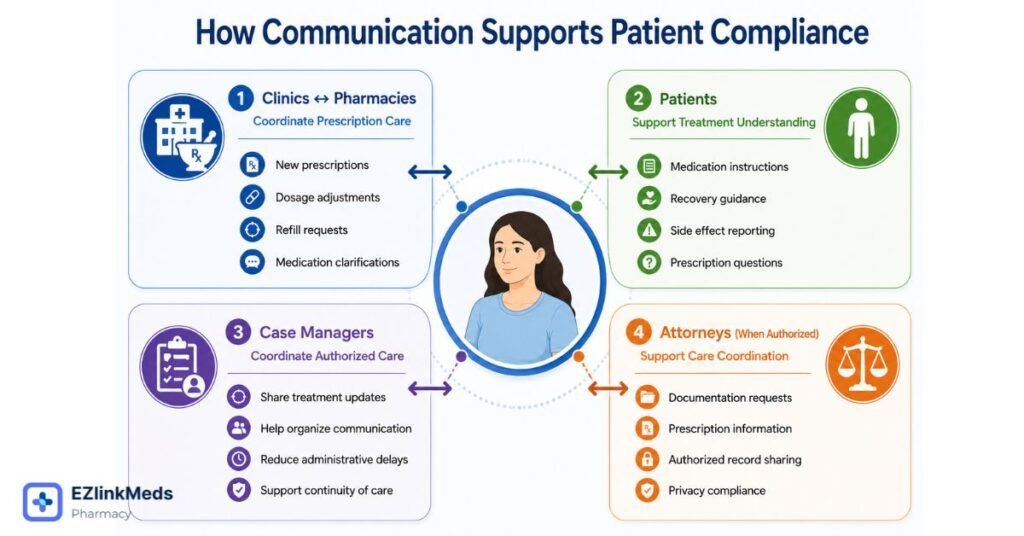
Consistent communication helps keep post-accident treatment moving forward as planned. When healthcare providers, pharmacies, patients, and authorized members of the care team share accurate information, questions can be addressed promptly and treatment plans can be updated without unnecessary interruptions.
Communication Between Clinics and Pharmacies
Orthopedic practices and pain management specialists frequently communicate with pharmacies regarding new prescriptions, dosage adjustments, refill requests, and medication clarifications.
Timely communication helps ensure prescriptions accurately reflect the provider’s treatment plan and allows any questions to be resolved before they affect patient care.
Communication With Patients
Patients benefit from receiving clear, easy-to-understand information about their medications and overall treatment plan. Discussing when to take medications, how they fit within the recovery process, and when to report new symptoms or side effects encourages patients to remain actively involved in their care.
Ongoing communication also provides opportunities to answer prescription-related questions and address concerns before they become barriers to following the prescribed treatment plan.
Communication With Case Managers
When a case manager is involved, they may help coordinate information between authorized healthcare providers, patients, and other members of the care team. This collaboration can help keep treatment progressing as scheduled while reducing administrative interruptions that might otherwise affect continuity of care.
Communication With Attorneys When Authorized
For personal injury cases, healthcare providers and pharmacies may communicate with attorneys when the patient has provided the appropriate authorization.
This communication may involve responding to documentation requests, confirming prescription-related information, or providing records needed to support the ongoing coordination of the patient’s care while maintaining applicable privacy requirements.
How Specialized Pharmacy Coordination Supports Clinical Practices
Specialized pharmacy coordination helps orthopedic practices and pain management clinics manage prescription-related processes more efficiently throughout a patient’s recovery. By working closely with prescribers and authorized members of the care team, a specialized pharmacy can support clinical workflows while allowing providers to remain focused on patient care.
This support may include reviewing prescriptions for accuracy, providing pharmacist consultations, answering medication-related questions, communicating with prescribers when clarification is needed, and maintaining organized prescription documentation.
Together, these services help improve communication, reduce administrative interruptions, and support consistent medication management throughout the course of treatment.
EZlinkMeds Supports Coordinated Post-Accident Care Across Southern California
EZlinkMeds may support orthopedic practices, pain management providers, and other authorized members of the care team with post-accident prescription services. Depending on the individual request, support may include prescription review, communication with licensed prescribers, pharmacist consultation, and organized dispensing documentation.
Same-day or next-day delivery may also be available for eligible prescriptions within eligible delivery areas, subject to prescription verification, medication availability, order timing, delivery conditions, and applicable pharmacy requirements.
EZlinkMeds may be able to assist healthcare providers, attorneys, case managers, and injured patients in Los Angeles, Glendale, Burbank, Pasadena, Long Beach, Santa Clarita, Thousand Oaks, Westlake Village, Oxnard, Ventura, and nearby communities, subject to pharmacy requirements and service availability. Language assistance and other practice-specific capabilities should be confirmed directly with the pharmacy before publication.
Coordinated Care at a Glance
Coordinated communication between healthcare providers and a specialized pharmacy can simplify prescription-related workflows throughout a patient’s recovery. The comparison below highlights how a coordinated approach may help support continuity of care while reducing unnecessary administrative complexity.
Coordinated Prescription Support at a Glance |
|
|---|---|
| Without a Central Pharmacy Contact | With Specialized Pharmacy Coordination |
| Prescription questions may be handled separately by each provider or pharmacy | One pharmacy may serve as a contact for prescriptions it receives and processes |
| Medication information may need to be gathered from several sources | Dispensing records maintained by the pharmacy may be easier to review in one place |
| Prescriber clarification may require repeated patient or staff follow-up | The pharmacy may contact the licensed prescriber directly when clarification is needed |
| Authorized documentation requests may be directed to different organizations | Records held by the pharmacy may be requested through its established process |
| Patients may need to arrange pharmacy pickup independently | Delivery may be discussed where available for an eligible prescription and location |
Conclusion
Coordinated post-accident care depends on more than clinical expertise alone. Consistent communication, organized prescription management, and collaboration between healthcare providers help support continuity throughout a patient’s recovery while reducing unnecessary administrative demands.
EZlinkMeds works alongside orthopedic practices, pain clinics, case managers, and personal injury attorneys by providing coordinated prescription support tailored to the needs of active injury cases. From prescription review and pharmacist consultation to organized documentation and communication with licensed prescribers, the pharmacy helps support a more connected approach to post-accident care.
If your practice or legal team is looking for a specialized pharmacy partner to help streamline prescription coordination for personal injury patients across Southern California, contact EZlinkMeds to learn how our services can support your care team.