

Effective communication is an important part of post-accident recovery. In Southern California’s diverse communities, language barriers can make it more difficult for patients to understand prescription instructions, ask medication-related questions, and follow their treatment plans. These challenges may interrupt continuity of care during recovery.
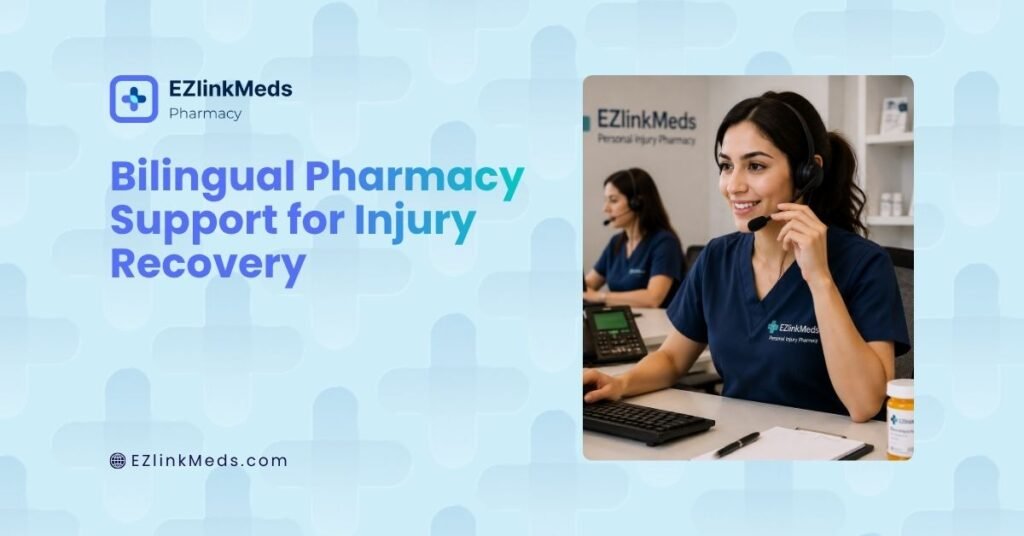
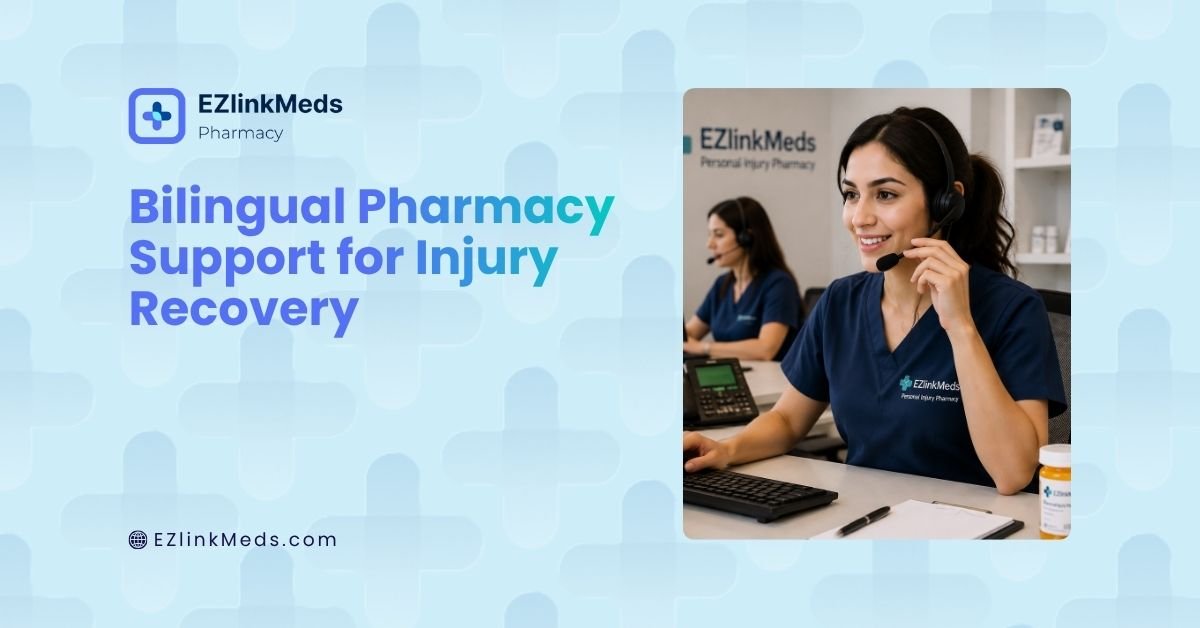
A bilingual personal injury pharmacy helps bridge that gap by providing prescription support in both English and Farsi, allowing patients, healthcare providers, and authorized care teams to communicate more effectively.
By combining multilingual communication with coordinated prescription services, clinics can better support patient engagement throughout treatment.
Key takeaway
- Bilingual pharmacy support in English and Farsi helps patients better understand prescription instructions, medication schedules, and follow-up recommendations after an accident.
- Clear communication can reduce language-related misunderstandings and support continuity of care throughout the recovery process.
- Specialized pharmacies provide multilingual counseling, prescription review, communication with licensed prescribers, and organized prescription documentation to support healthcare teams.
- EZlinkMeds may provide coordinated prescription support in English and Farsi for clinics, orthopedic practices, pain specialists, attorneys, case managers, and injured patients across Southern California, depending on current language-support and service availability.
Why Language Access Matters in Post-Accident Care
Southern California clinics may serve patients who are more comfortable discussing prescription-related matters in Farsi. For these patients, access to pharmacy support in both English and Farsi may make medication instructions and pharmacy communications easier to understand. Clinics serving these communities may benefit from pharmacy partners that can communicate effectively in both English and Farsi when patients prefer bilingual support.
Clear communication helps patients understand their medications, follow treatment instructions, attend follow-up appointments, and remain engaged throughout recovery.
When language barriers are reduced, healthcare providers and pharmacies can better support continuity of care while helping patients make informed decisions about their treatment.
After an accident, patients may receive new prescriptions, medication updates, and detailed care instructions from multiple providers. If this information is not communicated in a language they fully understand, misunderstandings can affect their ability to follow the prescribed treatment plan.
For many Southern California communities, access to a Farsi-speaking pharmacy in Los Angeles helps bridge this gap by providing prescription counseling and medication-related support in both English and Farsi. This bilingual approach promotes clearer communication between patients, pharmacies, and authorized healthcare providers throughout the recovery process.
As part of the broader framework of med-legal prescription coordination, bilingual pharmacy communication complements the systems that support prescription fulfillment, documentation, and continuity of care throughout a personal injury case. Learn more in our guide, The Complete Guide to Med-Legal Prescription Delivery: Optimizing Pharmacy Operations for Attorneys and Doctors.
Where Language Barriers Can Interrupt Recovery
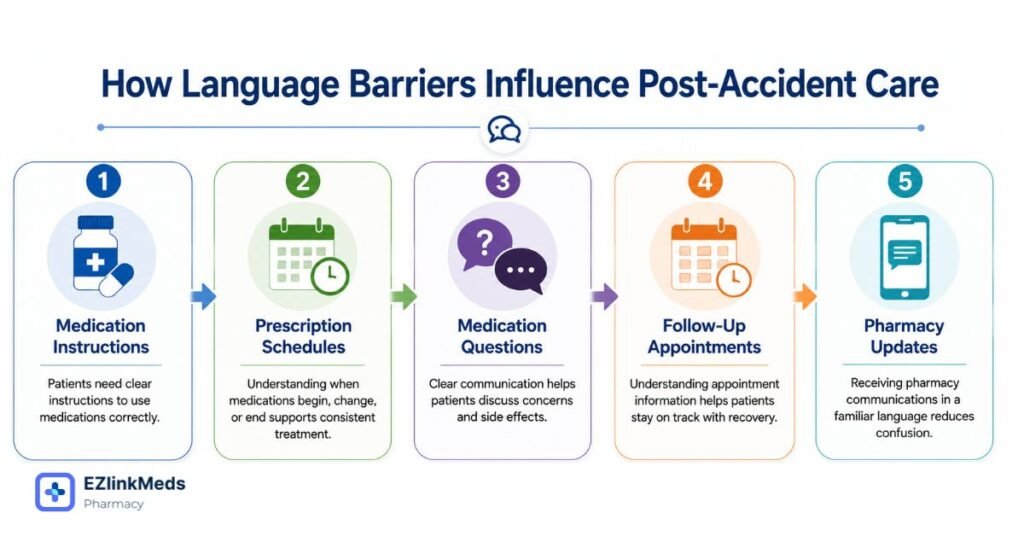
Understanding Medication Instructions
After an accident, patients often receive detailed instructions about how and when to take their medications. These directions may include dosage schedules, treatment duration, food or activity considerations, and other important guidance provided by the prescriber.
If patients do not fully understand these instructions because of a language barrier, they may take medications incorrectly, delay starting treatment, or avoid asking questions when clarification is needed.
Following Prescription Schedules
Many recovery plans involve multiple medications that may start, stop, or change over time. Understanding when to begin a new prescription, when to complete a course of treatment, or when a refill is needed becomes much easier when instructions are communicated in the patient’s preferred language.
Communicating Medication Concerns
Patients may experience side effects, have questions about medication effectiveness, or notice changes in their symptoms during treatment.
Being able to discuss these concerns comfortably with healthcare providers or pharmacy staff encourages timely communication and helps providers determine whether treatment adjustments are appropriate.
Without effective communication, patients may postpone raising concerns or discontinue medications without consulting their care team.
Scheduling Follow-Up Care
Follow-up appointments allow healthcare providers to evaluate healing, monitor recovery, and make informed decisions about ongoing treatment. Patients who have difficulty understanding appointment instructions, scheduling information, or provider recommendations may be more likely to miss visits or misunderstand the next steps in their care.
Providing information in a familiar language helps patients remain connected to their treatment plan and supports continuity between appointments.
Understanding Pharmacy Communications
Pharmacies may contact patients about prescription availability, refill reminders, clarification requests, or other medication-related updates. Receiving these communications in a language the patient understands helps reduce confusion and supports ongoing engagement with the treatment plan throughout recovery.
Supporting Patients Through Bilingual Pharmacy Communication
Bilingual pharmacy communication helps patients better understand their medications and remain engaged throughout recovery. By providing support in both English and Farsi, pharmacies can reduce communication barriers and make prescription information easier to understand.
This support may include:
- Medication counselling in English or Farsi where appropriately qualified language support is available.
- Clear prescription explanations covering dosage, timing, and important medication instructions.
- Refill-related communication in English or Farsi, where language support is available.
- Opportunities to ask an appropriately qualified pharmacy professional questions about prescription use, side effects, or other medication-related concerns.
- Ongoing pharmacy communication whenever prescriptions are updated or clarification is needed.
In healthcare, this type of language matching is often referred to as language concordance, meaning that the patient and healthcare professional communicate directly in the same preferred language.
Helping Clinics Deliver Culturally Competent Care
Providing culturally competent care involves more than overcoming language differences. It also means creating a healthcare environment where patients feel comfortable asking questions, understanding their treatment plan, and actively participating in their recovery.
For clinics serving Southern California’s diverse communities, bilingual communication can strengthen patient engagement throughout the course of care.
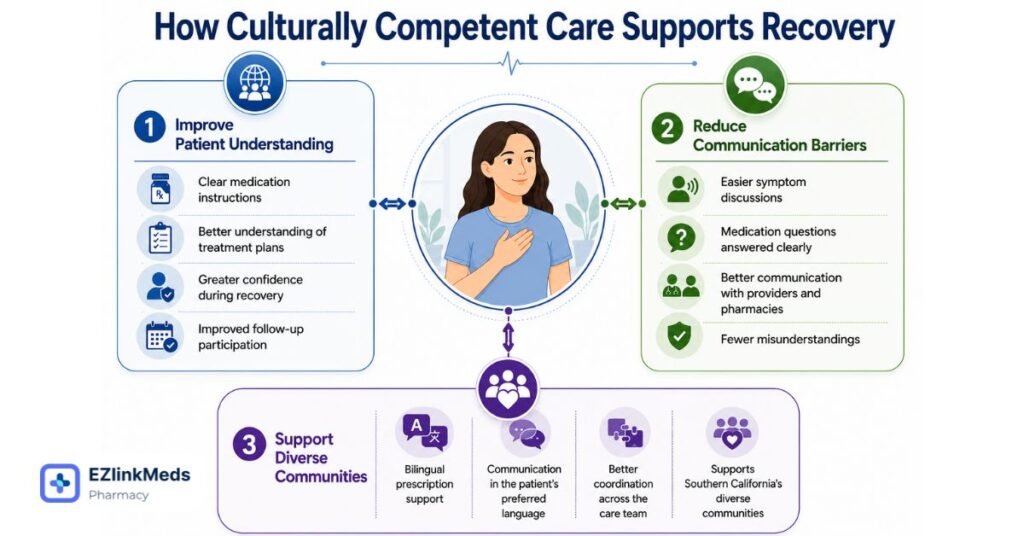
Improving Patient Understanding
Patients are more likely to follow medication instructions and attend recommended follow-up appointments when information is communicated in a language they understand. Clear explanations about prescriptions, treatment goals, and next steps help reduce confusion while encouraging patients to participate more confidently in their recovery.
Reducing Communication Barriers
Language differences can make it difficult for patients to describe symptoms, discuss medication concerns, or ask questions about their treatment plan.
Bilingual communication helps create more meaningful conversations between patients, healthcare providers, and pharmacy staff, allowing concerns to be addressed promptly and supporting continuity of care.
Supporting Diverse Southern California Communities
Orthopedic practices and pain management clinics throughout Southern California care for patients from many cultural and linguistic backgrounds.
Incorporating bilingual pharmacy support into the care process can complement culturally competent injury care in Glendale and surrounding communities by helping patients receive prescription-related information in their preferred language while supporting consistent communication across the healthcare team.
Language-Access Requirements for Covered Healthcare Organizations
Clinics and pharmacies should determine whether any federal language-access requirements apply to their operations. HHS explains that certain healthcare programs and organizations subject to federal civil-rights requirements may have obligations to provide meaningful access to individuals with limited English proficiency. This does not mean that every pharmacy must employ Farsi-speaking staff.
The Role of Bilingual Communication in Personal Injury Cases
Clear communication is an important part of maintaining continuity of care throughout a personal injury case. When patients understand their medications, follow-up instructions, and treatment recommendations in their preferred language, they are better prepared to participate in their recovery and communicate with their healthcare providers when questions arise.
Bilingual communication also supports accurate prescription understanding as treatment plans evolve. Medication adjustments, new prescriptions, and updated instructions are easier for patients to follow when they are explained in both English and Farsi, helping reduce misunderstandings that may interrupt the course of care.
In addition, consistent communication contributes to more organized prescription documentation. Accurate medication histories, prescription updates, and pharmacy records help ensure that authorized members of the care team have access to clear and current information throughout the patient’s treatment.
When appropriate authorization has been provided, bilingual communication can also improve coordination between healthcare providers, pharmacy staff, case managers, and attorneys. By helping each member of the care team exchange prescription-related information clearly and efficiently, bilingual support contributes to a more connected and consistent treatment experience without changing the clinical focus of patient care.
How Specialized Pharmacy Coordination Supports English- and Farsi-Speaking Patients
Specialized pharmacy coordination helps create a more accessible prescription experience for patients who prefer to communicate in either English or Farsi. By combining bilingual communication with pharmacy expertise, patients can receive the information they need to better understand their medications and remain engaged throughout treatment.
This support may include:
- Medication counselling in English or Farsi where appropriately qualified language support is available, helping patients understand the instructions associated with their prescriptions.
- Pharmacist consultations that allow patients to discuss medication-related concerns and ask questions, with language assistance provided where available.
- Prescription review to confirm prescription details, clarify directions when needed, and support accurate medication dispensing.
- Multilingual communication throughout the prescription process, helping patients receive clear information about medication updates, refill notifications, and other prescription-related matters.
- Answering prescription questions regarding dosage schedules, administration instructions, potential side effects, or other medication concerns that arise during recovery.
- Organized prescription documentation that helps maintain accurate medication records and supports consistent communication between authorized healthcare providers and pharmacy staff throughout the patient’s course of care.
By integrating bilingual communication into everyday pharmacy coordination, English- and Farsi-speaking patients can receive prescription-related support that is clear, accessible, and responsive to their individual communication needs.
How EZlinkMeds Supports Southern California Clinics
EZlinkMeds supports Southern California healthcare teams by providing coordinated prescription services designed for the needs of personal injury patients.
The pharmacy may provide prescription-related communication and patient support in English and Farsi, along with prescription review, communication with licensed prescribers, and organized prescription documentation, depending on current service availability. For eligible prescriptions and service areas, same-day or next-day delivery may also be available.
EZlinkMeds may assist physicians, orthopedic practices, pain management clinics, attorneys, case managers, and injured patients throughout Los Angeles, Glendale, Burbank, Pasadena, Long Beach, Santa Clarita, Thousand Oaks, Westlake Village, Oxnard, Ventura, and nearby Southern California communities, helping support clear communication and continuity of care across the treatment journey.
English-Only vs. Bilingual Pharmacy Support
The way prescription information is communicated can influence how easily patients navigate their treatment. For patients who are more comfortable speaking Farsi, bilingual communication may make prescription information easier to understand and allow questions to be addressed more directly.
English-Only and Bilingual Pharmacy Communication Compared |
||
|---|---|---|
| Communication Area | English-Only Pharmacy Communication | English and Farsi Pharmacy Support |
| Medication Instructions | Provided in English | May be explained in English or Farsi according to the patient’s preference |
| Language Matching | May not match the patient’s preferred language | Direct communication may be available in the patient’s preferred language |
| Prescription Questions | Outside interpretation may be needed | Patients may be able to ask pharmacy staff questions directly in Farsi |
| Pharmacy Updates | English-language communications may be harder for some patients to understand | Updates may be communicated in English or Farsi where the service is available |
| Communication Support | Additional language resources may be necessary | Bilingual support may be coordinated through one pharmacy team |
Conclusion
Clear communication is an important part of coordinated post-accident care. When patients fully understand their medications and treatment instructions in their preferred language, healthcare providers can better support continuity of care while reducing avoidable communication barriers throughout recovery.
EZlinkMeds may support clinics through services such as prescription review, communication with licensed prescribers, organized prescription documentation, and prescription-related communication in English and Farsi where language support is available.
Contact EZlinkMeds to discuss the English- and Farsi-language prescription support currently available for personal injury patients across Southern California.
The pharmacy can explain the prescription coordination, communication, and language-support services available for your clinic and patients.