

Coordinating prescription medications after an accident often involves far more than filling a prescription. Physicians, pharmacies, attorneys, case managers, and other authorized members of the care team must work together to support ongoing treatment while keeping communication and documentation organized.
When these processes become disconnected, medication delays, administrative burdens, and gaps in the treatment record can affect both patient recovery and case management.
Standard retail pharmacy workflows are primarily designed around prescription dispensing and ordinary patient, prescriber, payment, and recordkeeping processes. Personal injury matters may involve additional case-specific billing, documentation, and communication needs that require a more specialized coordination process. Managing prescription liens, provider communication, organized documentation, and medication access often requires a more integrated approach.
Med-legal prescription delivery connects these functions through coordinated pharmacy services that support healthcare providers, attorneys, and patients. By combining prescription review, lien-based billing management when applicable, provider communication, organized documentation, and localized delivery, specialized personal injury pharmacies help simplify prescription logistics while supporting continuity of care across Southern California.
Key takeaway
- Med-legal prescription delivery coordinates medication management between healthcare providers, pharmacies, attorneys, case managers, and patients throughout the recovery process.
- Unlike traditional retail pharmacies, personal injury pharmacies may offer lien-based billing, organized documentation, and ongoing prescription coordination.
- Integrated pharmacy networks help streamline communication, prescription tracking, pharmacist consultation, and provider support while reducing administrative burden.
- Coordinated prescription workflows support physicians, orthopedic practices, pain management clinics, chiropractors, personal injury attorneys, and case managers across Southern California.
- EZlinkMeds may support Southern California patients and care teams with localized prescription coordination, delivery options where available, and language assistance based on current service availability.
What is med-legal prescription delivery?
Med legal prescription delivery services coordinate prescription fulfillment, provider communication, lien-based billing when applicable, and medication delivery for personal injury cases. Unlike a traditional retail pharmacy, a personal injury pharmacy supports the coordinated needs of attorneys, physicians, orthopedic specialists, pain management clinics, and chiropractors throughout the recovery process.
After an accident, prescription management often involves more than dispensing medication. Healthcare providers, pharmacies, attorneys, and authorized care team members may all contribute to helping patients receive timely medications while maintaining organized communication and prescription coordination.
Unlike retail pharmacies that primarily focus on filling prescriptions, med legal prescription delivery services support the broader operational needs of personal injury care.
This includes communication with licensed prescribers, coordinated prescription management, deferred billing arrangements when applicable, and organized prescription records that help support continuity of care for both medical providers and legal professionals.
Why Traditional Pharmacy Workflows Fall Short in Personal Injury Cases
Standard retail pharmacy workflows are primarily designed around prescription dispensing and the pharmacy’s ordinary patient, prescriber, payment, and recordkeeping processes. They may not offer the additional case-specific billing, documentation coordination, or centralized communication processes used by some pharmacies serving personal injury matters.
- Case-Specific Communication: Retail pharmacies generally focus on communication related to the prescription, patient, and prescriber. Attorneys, case managers, or other third parties may need to follow separate authorization and records-request procedures when requesting pharmacy information.
- Documentation Requests: Pharmacies maintain prescription and dispensing records as required by applicable law, but those records may need to be requested and organized separately for personal injury case administration.
- Payment and Billing Processes: Standard pharmacy workflows use the payment and billing options available through that pharmacy. Contractual deferred-billing arrangements for personal injury matters may not be available through every pharmacy.
- Additional Administrative Coordination: When a case involves multiple providers, pharmacies, or authorized parties, legal and clinical teams may need to coordinate prescription-related information across separate organizations and communication channels.
- Centralized Case Support: Some specialized personal injury pharmacies offer additional processes for authorized case-related communication, organized documentation, and billing coordination. These services may reduce the number of separate administrative steps required during an active personal injury matter.
How Med-Legal Prescription Delivery Works
Med-legal prescription delivery follows a coordinated workflow that connects healthcare providers, pharmacies, patients, and authorized care team members. Each stage is designed to support timely medication access, organized communication, and streamlined prescription management throughout the course of treatment.
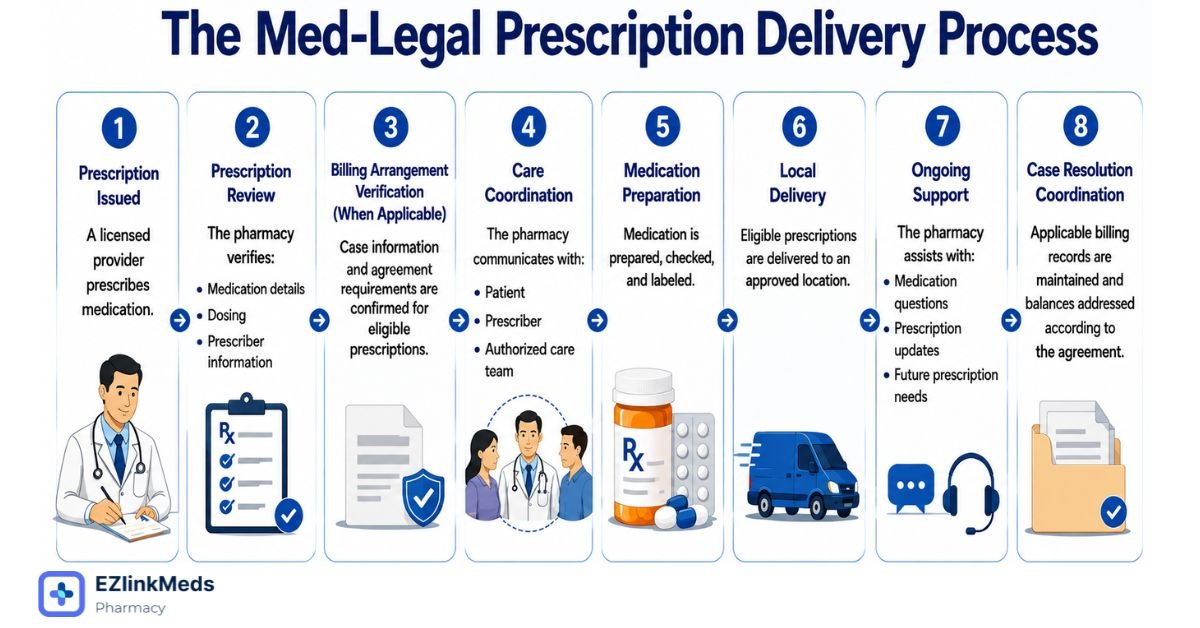
1. Provider Issues the Prescription
The process begins when a physician, orthopedic specialist, pain management provider, or other licensed prescriber determines that medication is appropriate as part of the patient’s treatment plan. The prescription is transmitted electronically or submitted through the provider’s standard prescribing process, allowing the pharmacy to begin reviewing the order promptly.
2. Prescription Review
Once received, the pharmacy reviews the prescription for accuracy and completeness. Medication details, dosing instructions, and prescriber information are verified, and a licensed pharmacist contacts the prescribing provider if clarification is needed. Completing this review early helps prevent unnecessary delays before the medication is prepared.
3. Billing Arrangement Verification (When Applicable)
If an eligible prescription will be provided under a contractual deferred-billing arrangement, the pharmacy confirms the necessary case information and applicable agreement requirements before processing the prescription.
4. Pharmacy Coordination
After verification is complete, the pharmacy coordinates communication with the patient, licensed prescriber, and authorized members of the care team when appropriate. This centralized communication helps reduce unnecessary back-and-forth between multiple parties while keeping the prescription process moving efficiently.
5. Medication Preparation
After verification is complete, the pharmacy prepares, labels, and performs final quality checks before dispensing the medication. Patient counseling information is also made available to support safe medication use.
6. Same-Day or Local Delivery
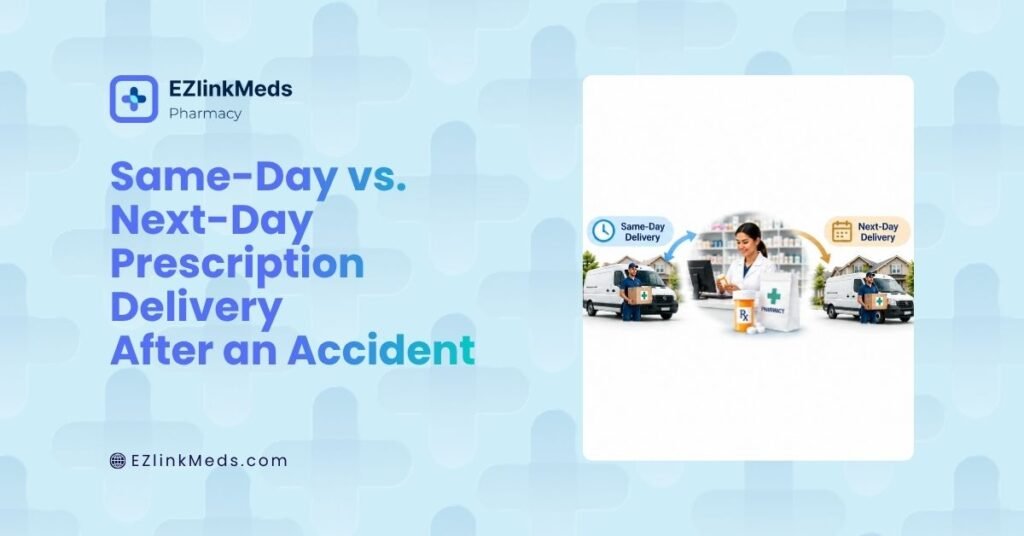
For eligible prescriptions and service areas, medications may be delivered directly to the patient’s home, workplace, or another approved location. Same-day or next-day local delivery can help patients begin treatment sooner while reducing the need to travel during recovery.
7. Ongoing Prescription Support
Prescription coordination continues after delivery. The pharmacy remains available to answer medication-related questions, communicate with licensed prescribers regarding prescription updates, and assist with future prescription needs throughout the patient’s recovery.
8. Case Resolution Coordination
When prescriptions are provided under a contractual deferred-billing arrangement, the pharmacy maintains applicable billing records during the case. When the personal injury matter is resolved, any outstanding balance is addressed according to the agreement’s terms.
The Role of the Personal Injury Pharmacy Within the Care Team
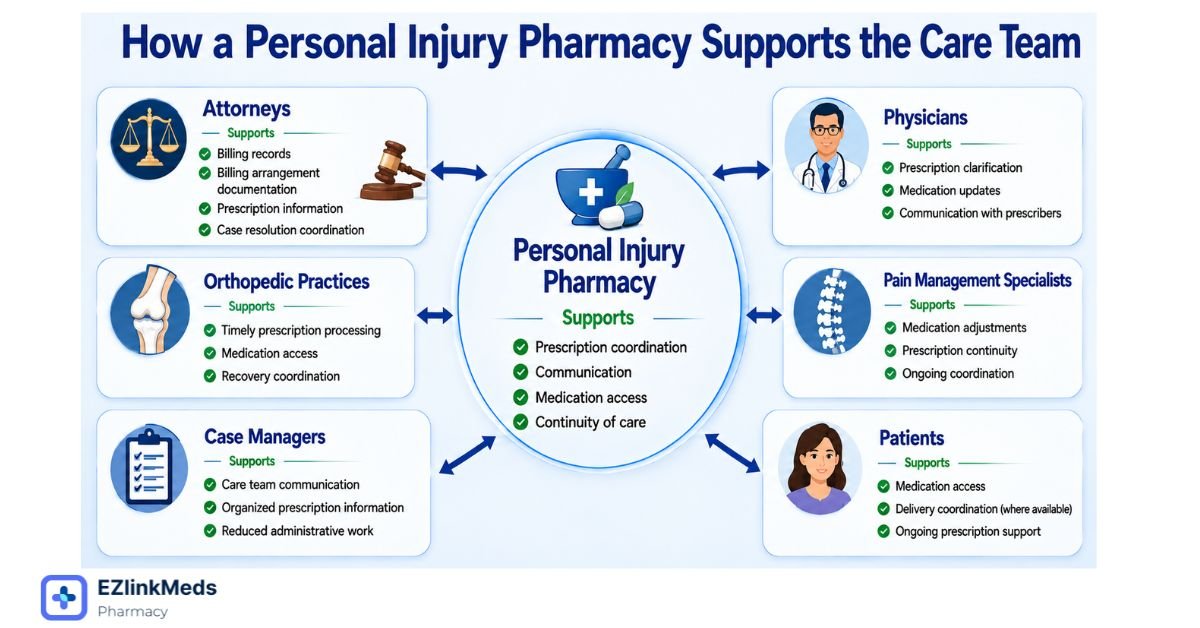
A personal injury pharmacy supports more than prescription fulfillment. It serves as a central point of coordination between healthcare providers, attorneys, patients, and authorized care team members, helping maintain communication, streamline prescription management, and support continuity of care throughout the recovery process.
Attorneys
For personal injury attorneys, organized medical lien management for law firms helps simplify prescription-related administration throughout a case.
A specialized pharmacy can maintain itemized billing records, coordinate lien documentation when applicable, and provide organized prescription information that supports case management and settlement coordination.
Physicians
Physicians rely on clear clinical communication to ensure patients receive medications as prescribed.
A personal injury pharmacy communicates directly with licensed prescribers when prescription clarification or updates are needed, helping reduce unnecessary delays while supporting the patient’s treatment plan.
Orthopedic Practices
Orthopedic specialists frequently prescribe medications following fractures, joint injuries, musculoskeletal conditions, and surgical procedures.
Coordinated injury medication management helps support timely prescription processing, pharmacist communication, and medication access, allowing orthopedic teams to concentrate on monitoring healing and adjusting treatment plans throughout recovery.
Pain Management Specialists
Pain management providers may adjust medications throughout the recovery process based on the patient’s progress. A specialized pharmacy helps support prescription continuity by coordinating medication updates, facilitating communication with prescribers, and helping patients maintain access to prescribed therapies.
Case Managers
Case managers help keep multiple providers connected throughout a personal injury case. Pharmacy coordination supports this role by facilitating communication between authorized members of the care team, helping organize prescription-related information, and reducing administrative complexity.
Patients
Patients benefit from a streamlined prescription process that improves medication access and reduces unnecessary barriers during recovery.
Coordinated pharmacy services help patients receive prescribed medications more efficiently while providing medication guidance, delivery coordination where available, and ongoing prescription support as treatment continues.
Prescription Liens and Med-Legal Billing Explained
In some personal injury matters, a specialized pharmacy may offer an eligible patient a written contractual billing arrangement under which payment for qualifying prescriptions is deferred according to agreed terms. These arrangements are sometimes described in the industry as prescription or pharmacy liens, but they should not be assumed to have the same statutory status, notice requirements, enforcement rules, or payment protections as statutory liens created under California law.
- Contractual Billing Arrangements: Depending on the pharmacy and individual matter, eligible prescriptions may be dispensed under a written agreement that defers payment. The agreement should identify eligibility, payment obligations, reimbursement terms, and what happens if the underlying personal injury matter produces no recovery. Because these agreements involve specific billing and settlement procedures, understanding How Prescription Liens Work After a Car Accident in Southern California provides additional context for how prescription costs are coordinated throughout a personal injury case.
- Deferred Billing: Instead of collecting payment when the prescription is dispensed, the pharmacy defers billing until the case reaches settlement or another agreed resolution. This can help reduce financial barriers to obtaining prescribed medications during recovery.
- Lien-Based Rx Billing: Specialized pharmacies maintain billing processes designed to support lien-based prescription services, helping manage prescription charges separately from standard retail transactions when applicable.
- Settlement Payment Process: Once the personal injury case is resolved, the outstanding prescription balance is reviewed and satisfied according to the lien agreement and the settlement distribution process.
- Transparent Billing: Itemized prescription charges and billing records help provide a clear accounting of medications dispensed and the related costs throughout the patient’s treatment.
- Organized Tracking: Maintaining organized prescription and billing records supports continuity throughout the case while helping healthcare providers, patients, and authorized legal representatives access important information when needed.
Maintaining Treatment Continuity Throughout Recovery
Maintaining treatment continuity depends on patients receiving prescribed medications without unnecessary interruptions while healthcare providers remain connected throughout the recovery process. Coordinated prescription support helps promote timely medication access, clear communication, and consistent care across the treatment journey.
Uninterrupted medication access and ongoing communication between physicians, orthopedic specialists, pain management providers, pharmacies, and other authorized members of the care team help keep treatment plans aligned as recovery progresses.
When prescription updates are needed, coordinated communication allows adjustments to be addressed efficiently while supporting patient compliance and reducing avoidable delays.
The connection between coordinated prescription services and successful recovery is explored further in Coordinating Post-Accident Care: How Orthopedic Practices and Pain Specialists Protect Patient Compliance, which examines how integrated care supports consistent treatment throughout the recovery process.
California Regulatory Considerations for Med-Legal Pharmacy Operations
Med-legal pharmacy services operate within a regulatory framework that includes pharmacy licensing requirements, documentation standards, and established legal principles affecting medical billing.
Staying aligned with applicable regulations helps support transparent prescription management and organized coordination throughout personal injury cases.
Specialized pharmacies must comply with requirements established by the California State Board of Pharmacy, including standards governing prescription processing, recordkeeping, patient privacy, and pharmacist oversight. Maintaining accurate documentation and organized prescription records supports both regulatory compliance and continuity of care throughout the patient’s treatment.
Legal principles governing recoverable medical expenses may also affect how billing evidence is evaluated in personal injury litigation. In Howell v. Hamilton Meats & Provisions, Inc., the California Supreme Court held that a plaintiff could not recover as past medical expenses amounts that neither the plaintiff nor the insurer paid or remained liable to pay after negotiated reductions. Howell did not establish the rules for contractual pharmacy liens, so lien-based billing arrangements must be evaluated according to the facts, governing agreements, and other applicable law.
For certain transportation-network-company and app-based-driver accident claims, California Senate Bill 623 added Civil Code § 3333.9, which applies to qualifying automobile accidents occurring on or after January 1, 2027. Subject to the statute’s specific terms and exceptions, recovery of past medical expenses for services provided by a lien-based provider is limited to the 70th percentile of FAIR Health billed charges, or a comparable commercially recognized billed-charge database, for the same or similar service in the applicable geographic area. Because the provision is limited to defined claims and has a January 1, 2027 applicability date, it should not be treated as a general cap on personal injury medical or pharmacy billing. Whether the provision applies to a particular pharmacy arrangement or prescription-related charge depends on the statutory definitions and circumstances of the individual claim.
Although these legal and regulatory requirements do not change how patients receive prescribed medications, they reinforce the value of consistent documentation, transparent billing practices, and coordinated pharmacy operations throughout the lifecycle of a personal injury case.
Traditional Retail Pharmacy vs. Specialized Med-Legal Prescription Delivery
Traditional retail pharmacies and specialized med-legal prescription delivery services both dispense medications, but they serve different operational needs. The comparison below highlights how specialized pharmacy workflows support the coordination required for personal injury cases while traditional pharmacies focus primarily on routine prescription fulfillment.
Key Differences Between Traditional Retail Pharmacies and Med-Legal Prescription Delivery |
||
|---|---|---|
| Area | Standard Pharmacy Workflow | Specialized Personal Injury Pharmacy Coordination |
| Billing | Uses the pharmacy’s available payment and billing processes | Eligible matters may have additional contractual billing arrangements |
| Communication | Focuses on prescription, patient, prescriber, and pharmacy needs | May also include authorized case-related coordination |
| Documentation | Maintains required prescription and dispensing records | Records may also be organized for authorized PI-related requests |
| Provider Support | Pharmacists communicate with prescribers as clinically or operationally appropriate | May provide an additional coordination point for PI prescription matters |
| Delivery | Pickup or delivery according to the pharmacy’s available services | Local delivery may be available for eligible prescriptions and locations |
While both models provide access to prescribed medications, specialized med-legal prescription delivery extends beyond dispensing by supporting communication, documentation, billing coordination, and continuity of care throughout the patient’s recovery.
This integrated approach can reduce administrative burden for healthcare providers while creating a more connected experience for patients and authorized care teams.
Supporting Healthcare and Legal Networks Across Southern California
Personal injury recovery often involves healthcare providers, pharmacies, attorneys, and case managers working across multiple communities. Regional prescription coordination helps support timely medication access, clear communication, and continuity of care throughout Southern California.
EZlinkMeds supports healthcare and legal professionals in Los Angeles, Glendale, Burbank, Pasadena, Long Beach, Santa Clarita, Thousand Oaks, Westlake Village, Oxnard, and Ventura through a coordinated prescription network. For eligible prescriptions and service areas, same-day or next-day delivery may be available to help patients access medications without unnecessary delays.
To serve Southern California’s diverse communities, EZlinkMeds may provide prescription-related communication and patient support in English and Farsi, depending on current service availability.
Why Healthcare Providers and Attorneys Choose an Integrated Pharmacy Network
An integrated pharmacy network helps connect healthcare providers, pharmacies, attorneys, and authorized care team members through a coordinated prescription workflow. By centralizing prescription management, it supports continuity of care while reducing administrative complexity for everyone involved in the patient’s recovery.
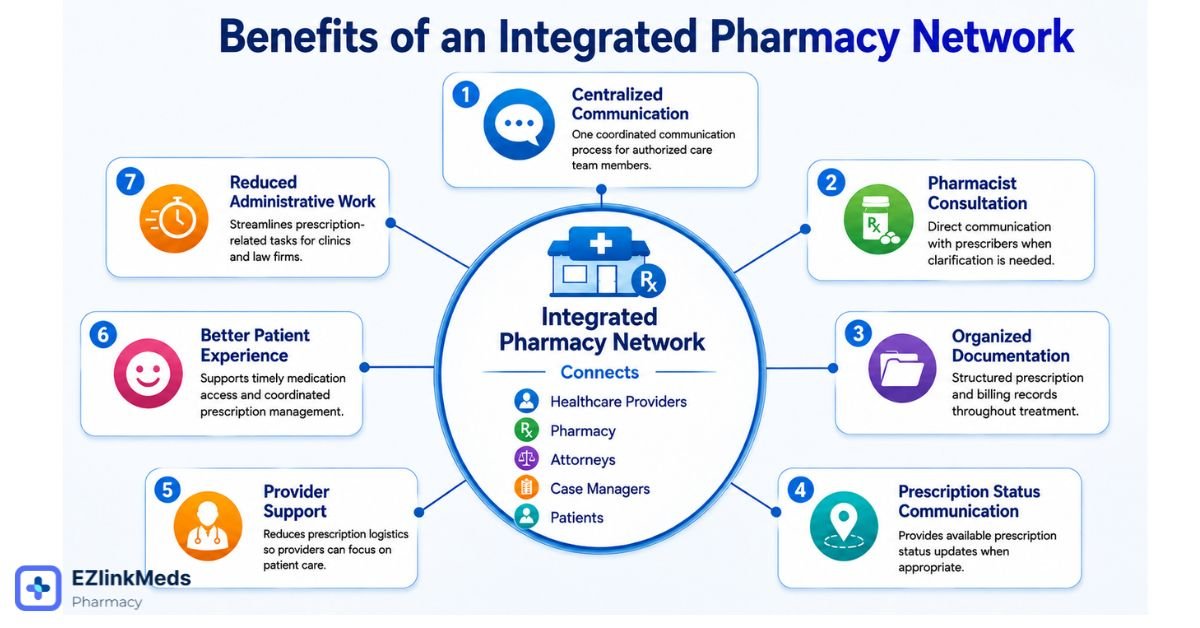
Centralized Communication: A single coordination process helps streamline communication between licensed prescribers, pharmacists, attorneys, case managers, and other authorized care team members, reducing fragmented follow-up.
Pharmacist Consultation: Pharmacists communicate directly with licensed prescribers when clarification or prescription updates are needed, helping support accurate and efficient medication management.
Organized Documentation: Maintaining structured prescription records and billing information helps providers and authorized legal professionals access consistent information throughout the patient’s treatment.
Prescription Status Communication: When appropriate and permitted, centralized pharmacy communication may help authorized providers or case teams obtain available updates about prescriptions handled through the pharmacy.
Provider Support: Physicians, orthopedic practices, pain management clinics, and chiropractors can spend less time managing prescription logistics and more time focused on patient care.
Improved Patient Experience: Coordinated communication, timely medication access, and organized prescription support help create a smoother treatment experience while encouraging continuity of care.
Reduced Administrative Burden: Consolidating prescription-related communication and coordination into a single workflow helps reduce repetitive administrative tasks for both healthcare providers and law firms.
As part of this integrated model, EZlinkMeds serves as operational infrastructure by supporting centralized communication, pharmacist consultation, organized prescription management, and localized medication delivery. This coordinated approach helps simplify prescription logistics while supporting healthcare providers, attorneys, and patients throughout Southern California.
Conclusion
Coordinated prescription management plays an important role in supporting both patient recovery and the day-to-day operations of healthcare providers and personal injury law firms.
By bringing together pharmacies, physicians, specialists, attorneys, case managers, and patients through a connected workflow, med-legal prescription delivery helps reduce administrative complexity while supporting continuity of care throughout the treatment process.
Whether you are a physician, orthopedic practice, pain management clinic, chiropractor, personal injury attorney, or case manager, EZlinkMeds is available to help simplify prescription logistics through coordinated communication, organized prescription management, and localized medication delivery.
Connect with our team to learn how an integrated pharmacy network can support efficient medication management and coordinated patient care across Southern California.