



The days following an injury can quickly become filled with medical appointments, phone calls, paperwork, and new prescriptions. Although medication may be prescribed right away, receiving it is not always as straightforward as expected.
Transportation difficulties, pharmacy processing, medication availability, and prescription clarification can all affect how quickly a prescription is ready.
For many patients across Southern California, these delays occur at the same time they are coordinating care with healthcare providers and relying on family members or caregivers for support.
Personal injury pharmacies may help simplify
Key takeaway
- Prescription delays can happen for practical reasons, such as incomplete information, medication availability, transportation challenges, or the need for prescriber clarification.
- Taking simple steps before leaving your appointment may help reduce unnecessary delays and keep the prescription process moving.
- Same-day or next-day delivery may be available for eligible prescriptions within eligible delivery areas, subject to pharmacy requirements and availability.
- EZlinkMeds can review prescription requests, answer questions, and discuss available pharmacy services for eligible prescriptions.
Why Even a One-Day Prescription Delay Can Create New Challenges
Accessing prescribed medication promptly can be an important part of the early recovery process. Even a short delay may create additional challenges for patients who are recovering at home, managing pain, arranging transportation, and attending follow-up appointments. Reducing avoidable delays can help make prescription access more manageable during an already demanding time.
During the first days after an accident, daily schedules can quickly become filled with visits to physicians, imaging centers, physical therapy appointments, or other follow-up care.
If traveling is difficult because of pain, mobility limitations, or a damaged vehicle, returning to the pharmacy another day may not be convenient. Family members or caregivers may also need to adjust their own schedules to assist with transportation or medication pickup.
While every prescription follows its own review process, timely prescription access can help patients stay focused on their recovery instead of spending additional time coordinating pharmacy visits or resolving avoidable delays.
Six Common Reasons Accident Prescriptions Get Delayed
Prescription delays can happen for a variety of practical reasons, many of which have simple solutions once they are identified. Being aware of these common situations may help patients take steps to reduce unnecessary waiting.
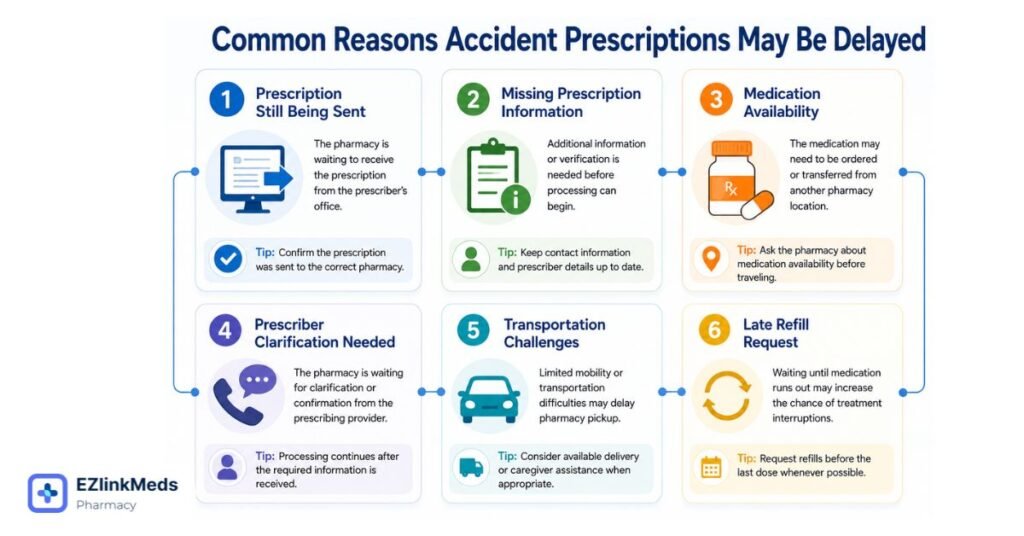
Waiting for the Prescription to Reach the Pharmacy
After a medical appointment, a prescription must first be transmitted to the patient’s chosen pharmacy before it can be reviewed.
Depending on the prescribing process and the information received, there may be a delay before the pharmacy can begin processing the request. Confirming that the prescription has been sent to the correct pharmacy can help avoid unnecessary waiting.
Missing Prescription Information
If important prescription details are incomplete or require verification, the pharmacy may need additional information before processing the medication. Keeping your contact information up to date and providing accurate prescriber details can help reduce delays if clarification is needed.
Medication Availability
Some medications may need to be ordered or transferred from another location if they are not immediately available. Patients can contact the pharmacy to ask about availability before making a trip.
Waiting for Prescriber Clarification
Occasionally, the pharmacy may need to contact the licensed prescriber to clarify prescription instructions or confirm certain details before the medication can be prepared. Processing can continue once the required information has been received from the prescriber’s office.
Transportation Challenges
Limited mobility, a damaged vehicle, or relying on family members or caregivers for transportation may make it more difficult to visit the pharmacy as soon as a prescription is ready.
Waiting Too Long to Request a Refill
For medications that require ongoing use, waiting until the last dose before requesting a refill can increase the likelihood of an interruption. Contacting the pharmacy in advance gives more time to address any questions or authorization requirements.
What Patients Can Do Before Leaving Their Appointment
A few simple steps before leaving your appointment can help reduce unnecessary delays and make the prescription process smoother. Taking a moment to confirm key details may save time later if questions arise.
Confirm Which Pharmacy Will Receive the Prescription
Before leaving the clinic, ask your healthcare provider which pharmacy will receive your prescription. If you have a preferred pharmacy or need the prescription sent to a different location, mention this before it is transmitted. Confirming the destination early can help avoid the need for a prescription transfer later.
Verify Your Contact Information
Make sure the healthcare provider and pharmacy have your current phone number and other contact details. Accurate information allows the pharmacy to reach you promptly if additional information or clarification is needed.
Ask When the Prescription Was Sent
If your prescription is being sent electronically, ask when it is expected to be transmitted. Knowing when it was sent can help you decide when to contact the pharmacy and avoid unnecessary waiting if the prescription has not yet been received.
Keep the Prescriber’s Information Available
Save the name and contact information of your licensed prescriber before leaving the appointment. If the pharmacy needs to verify prescription details, having this information readily available may help the process move forward more efficiently.
How Delivery May Reduce Some of These Delays
Prescription delivery may help reduce some of the practical challenges that can arise during recovery, especially when traveling to a pharmacy is not convenient. Here are several ways delivery may make prescription access easier for eligible patients.
Patients looking for same-day injury pharmacy delivery are often seeking practical ways to receive prescribed medications without making another trip while recovering. Availability depends on the prescription, location, pharmacy operations, and applicable requirements.
- Avoid another trip to the pharmacy. Delivery may eliminate the need to make an additional journey after medical appointments or while recovering at home.
- Receive medications during recovery. Patients with limited mobility or temporary activity restrictions may be able to receive eligible prescriptions without leaving home.
- Reduce travel for family members and caregivers. Delivery may lessen the need for others to rearrange their schedules to pick up medications on the patient’s behalf.
- Support patients with transportation challenges. Patients without access to a vehicle or those unable to drive temporarily can ask the pharmacy whether delivery is available for their prescription and location.
Local delivery is one part of a broader med-legal prescription process that may also involve prescription review, communication with licensed prescribers, documentation, and support for eligible personal injury matters. Our guide to med-legal prescription delivery for attorneys, healthcare providers, and injured patients explains how these elements can work together across the prescription process.
When Delivery Might Take Longer Than Expected
Although delivery may be available for eligible prescriptions, certain circumstances can affect how quickly a medication is prepared or delivered. The factors below are some of the more common reasons additional time may be needed.
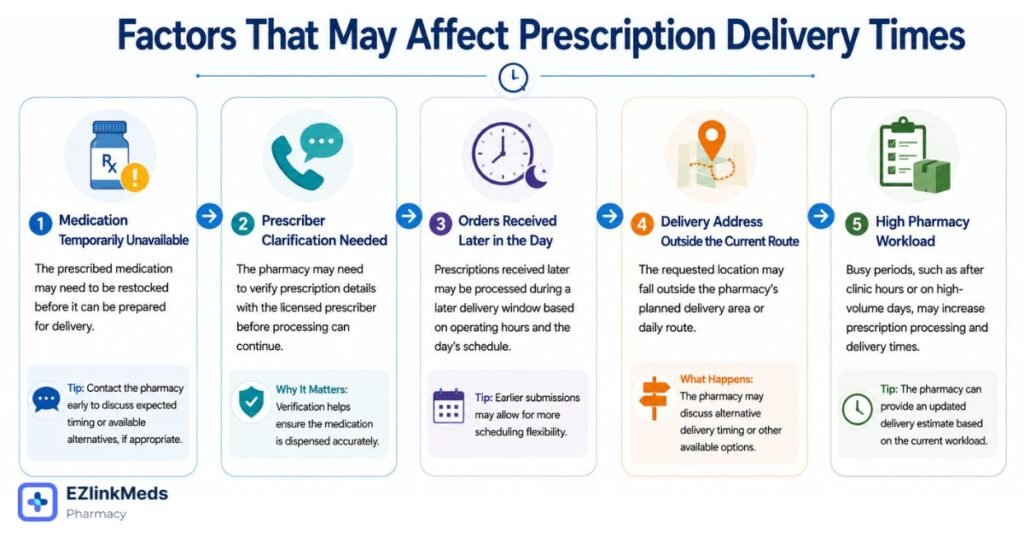
Medication is temporarily unavailable
Not every medication is immediately available at all times. If a prescribed medication needs to be restocked, the pharmacy may need additional time before it can be prepared for delivery.
Contacting the pharmacy early can help patients understand the expected timeline and discuss any available alternatives if appropriate.
Clarification from the prescriber is needed
Occasionally, the pharmacy may need to verify prescription details with the licensed prescriber before processing can continue. This additional communication helps ensure the prescription is dispensed accurately, but it may extend the overall processing time until the necessary information is received.
Orders Received Later in the Day
The time a prescription is received can influence when it is processed. Prescriptions submitted later in the day may be scheduled for a later delivery window, depending on the pharmacy’s operating hours and the day’s delivery schedule.
Requested address is outside the current delivery route
Delivery routes are planned based on location and daily logistics. If the requested address falls outside the pharmacy’s current delivery route or eligible delivery areas, the pharmacy may need to discuss alternative delivery timing or other available options before confirming the request.
High Pharmacy Workload
Prescription demand is not always consistent throughout the day. Periods of increased activity, such as after clinic hours or during busy weekdays, may affect processing times.
If a delay occurs, the pharmacy can provide an updated estimate based on the current workload and the status of the prescription.
Tips for Keeping Your Prescription Moving
While some delays are outside a patient’s control, a few simple steps can help keep the prescription process moving as smoothly as possible.
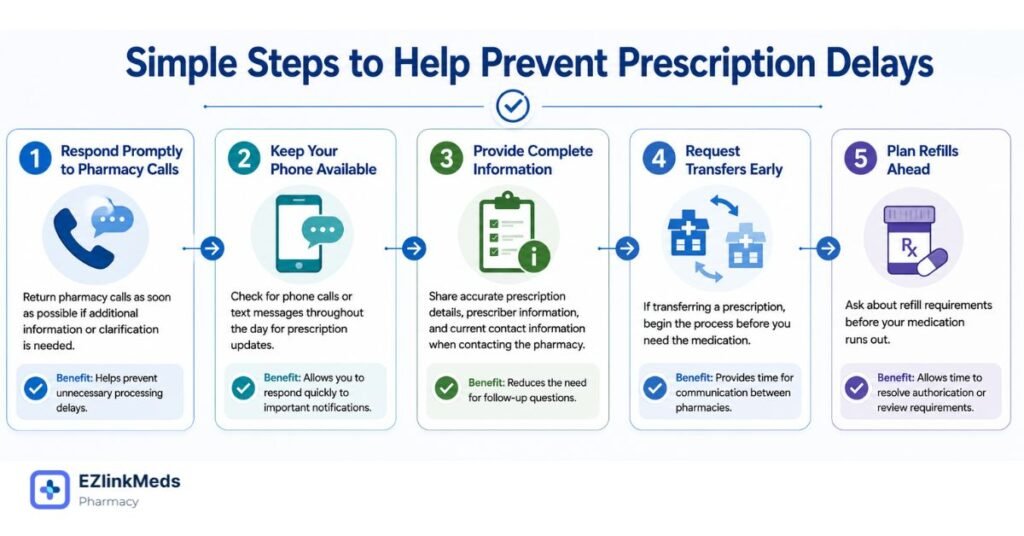
Respond Promptly to Pharmacy Calls
If the pharmacy contacts you with a question or needs additional information, returning the call as soon as possible can help avoid unnecessary delays in processing your prescription.
Keep Your Phone Available
Prescription updates are often provided by phone or text message. Keeping your phone nearby and checking for missed calls or messages throughout the day can help you receive important updates and respond promptly if the pharmacy needs to reach you.
Provide Complete Information
Sharing accurate prescription details, your licensed prescriber’s information, and up-to-date contact information when you first contact the pharmacy can reduce the need for additional follow-up later.
Request Transfers Early
If you plan to move a prescription from another pharmacy, ask about the transfer before you need the medication. Starting the process early allows time for any required communication between pharmacies.
Ask Refill Questions Before Running Out
If your treatment involves ongoing medication, don’t wait until the last dose to contact the pharmacy. Asking about refill requirements in advance provides more time to address any prescriber authorization or pharmacy review that may be needed.
Preparing for Delivery
If prescription delivery is available for your medication and location, preparing a few details in advance can help the process go more smoothly. Taking a few minutes to confirm important information may reduce unnecessary delays and help the pharmacy coordinate your delivery more efficiently. Before your medication is scheduled for delivery, consider the following:
- Confirm your delivery address. Make sure the pharmacy has the correct address.
- Provide gate codes or access instructions. Share any information needed to reach your home or workplace.
- Know who can receive the medication. Ask if another authorized adult may accept the delivery if you are unavailable.
- Answer delivery calls or messages. Respond promptly if the pharmacy needs to confirm delivery details.
- Store your medication properly. Follow the storage instructions provided with your prescription after it arrives.
How EZlinkMeds Helps Reduce Administrative Delays
Administrative questions can sometimes slow the prescription process when information is incomplete or needs clarification. EZlinkMeds reviews each request and lets patients know if any additional information is needed before processing can continue.
If questions arise, the pharmacy can help explain the next steps, communicate with the licensed prescriber when appropriate, and keep patients informed throughout the review process. Clear communication may help reduce unnecessary delays and make the prescription process easier to navigate.
Local Support Throughout Southern California
EZlinkMeds may assist patients and referral partners throughout Los Angeles, Glendale, Burbank, Pasadena, Long Beach, Santa Clarita, Thousand Oaks, Westlake Village, Oxnard, Ventura, and nearby communities. Pharmacy services and prescription support may be available based on the patient’s individual circumstances, applicable pharmacy requirements, and the services available at the time of the request.
Conclusion
Prescription access can become more complicated when transportation, scheduling, and pharmacy processing all need to be coordinated during recovery. Addressing prescription questions early and providing complete information can help keep the process moving as smoothly as possible.
If you’re recovering from an accident and experiencing prescription delays, EZlinkMeds Pharmacy can review your request, answer prescription-related questions, identify missing information when appropriate, and discuss available pharmacy services for your individual circumstances.