

Personal injury care relies on coordinated communication between physicians, orthopedic specialists, pain management providers, pharmacies, and other members of the healthcare team. When prescription-related processes become disconnected, clinics may spend valuable time addressing administrative issues that can interrupt patient treatment and increase staff workload.
An integrated prescription logistics network helps connect every stage of the prescription process, from the moment a provider issues a prescription through ongoing medication support.
By coordinating communication between healthcare providers, pharmacies, and authorized care teams, specialized pharmacy services can help streamline prescription management, support continuity of care, and reduce administrative burdens for physicians, clinics, and specialists across Southern California.
Key takeaway
- Integrated prescription logistics connect physicians, specialists, pharmacies, and authorized care teams through a coordinated workflow.
- Effective communication, prescription review, and pharmacy coordination help support continuity of care while reducing administrative work for clinical practices.
- Specialty providers, including orthopedic practices, pain management clinics, and chiropractors, benefit from streamlined prescription management throughout patient recovery.
- EZlinkMeds supports healthcare providers across Southern California with prescription coordination, pharmacist communication, and same-day or next-day delivery where available.
Why Integrated Prescription Logistics Matter for Modern Clinical Practices
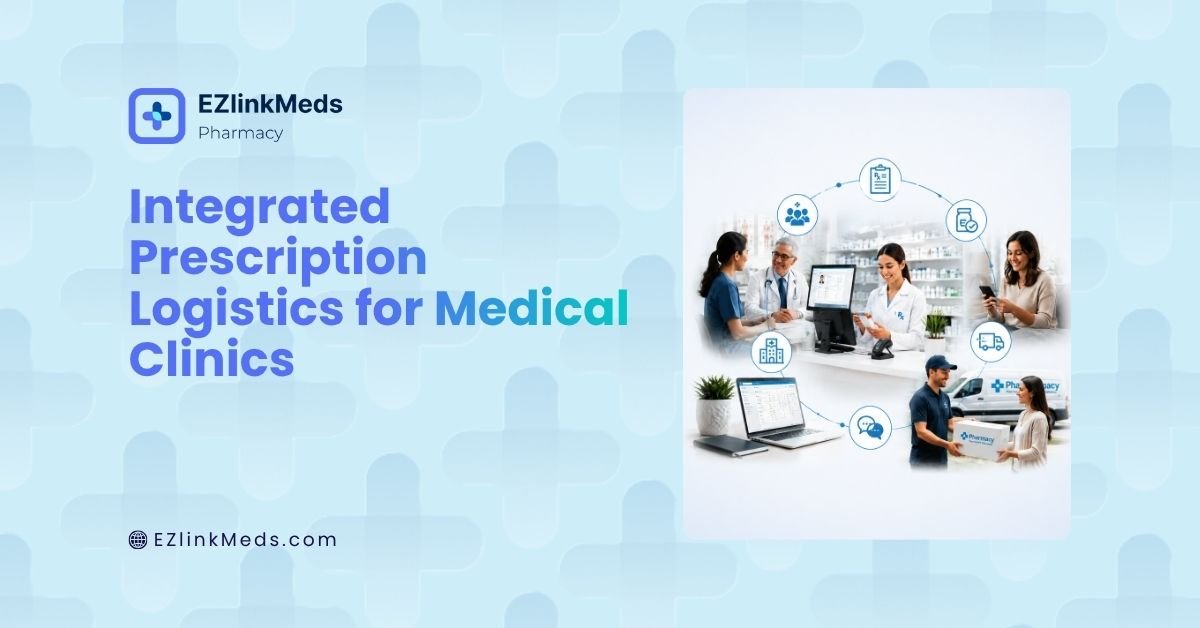
Integrated prescription logistics for medical clinics connect e-prescribing, pharmacy coordination, provider communication, documentation, and patient access into a streamlined workflow. This coordinated approach helps healthcare teams support continuity of care while reducing prescription-related administrative demands.
After a prescription is sent electronically, effective coordination between providers and pharmacies helps keep medications accessible, communication organized, and documentation up to date.
A Personal Injury Pharmacy in Los Angeles can support these workflows by assisting with prescription review, provider communication, and organized medication records throughout the patient’s recovery.
For a broader look at how clinic-level prescription coordination supports healthcare providers and legal teams, see The Complete Guide to Med-Legal Prescription Delivery: Optimizing Pharmacy Operations for Attorneys and Doctors, which explores the role of integrated pharmacy operations within the larger med-legal care network.
Building a Connected Healthcare Network
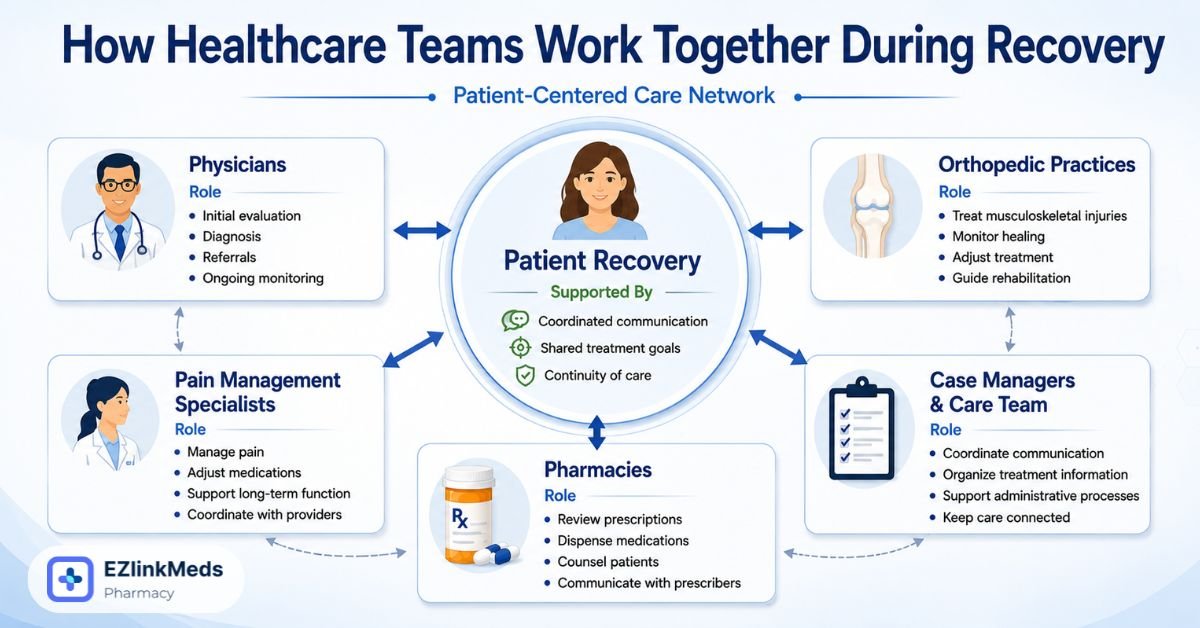
Successful patient recovery depends on more than the expertise of a single healthcare provider. Personal injury treatment often involves multiple professionals working together to guide the patient from the initial evaluation through rehabilitation and ongoing follow-up care.
Each member of the healthcare network contributes unique clinical knowledge, and effective communication between these professionals helps support continuity of care while keeping treatment plans aligned throughout recovery.
Physicians
Physicians often serve as the first point of clinical contact following an injury. They evaluate the patient’s condition, establish an initial diagnosis, prescribe medications when appropriate, and determine whether referrals to specialists or additional diagnostic testing are needed.
Throughout recovery, physicians continue to monitor progress, review treatment outcomes, and collaborate with other healthcare professionals as the patient’s needs change.
Orthopedic Practices
Orthopedic specialists focus on diagnosing and treating injuries involving the bones, joints, muscles, ligaments, and tendons.
They oversee surgical and non-surgical treatment plans, evaluate healing through follow-up visits, adjust medications when necessary, and coordinate rehabilitation recommendations that help restore mobility and function.
Their ongoing communication with other providers helps ensure treatment remains consistent as recovery progresses.
Pain Management Specialists
Pain management specialists help patients manage pain while supporting long-term functional recovery. They assess how patients respond to treatment, adjust medication regimens when appropriate, recommend interventional procedures when indicated, and work closely with referring physicians and orthopedic providers to ensure pain management strategies complement the overall treatment plan.
Pharmacies
Pharmacies support the healthcare network by reviewing prescriptions, dispensing medications, answering prescription-related questions, and communicating with prescribers whenever clarification is needed.
They also provide medication counseling, help patients understand how to use their prescriptions correctly, and support continuity of care as medications are updated or renewed during the recovery process.
Case Managers and Authorized Care Teams
Case managers and other authorized members of the care team help connect the various professionals involved in a patient’s recovery.
They facilitate communication between healthcare providers, coordinate administrative processes, organize treatment information, and help ensure important updates are shared with the appropriate parties.
By supporting collaboration across the care network, they help create a more coordinated treatment experience for both providers and patients.
From Prescription to Patient: How the Process Works
An integrated prescription workflow connects the clinical practice, pharmacy, patient, and authorized care team through a clear sequence that supports accurate processing, timely communication, and continuity of care.
- Prescription Sent Electronically: The physician or specialist submits the prescription through the practice’s e-prescribing system with the necessary patient, medication, and prescriber details.
- Prescription Review: The pharmacy reviews the prescription for completeness and contacts the prescriber when clarification is needed.
- Coordination With the Authorized Care Team: For personal injury cases, the pharmacy may confirm required information with authorized case managers, attorneys, or healthcare team members.
- Billing Arrangements for Eligible Personal Injury Prescriptions: A specialized pharmacy may offer a written billing arrangement that defers payment for qualifying prescriptions. Eligibility, payment responsibility, and reimbursement terms depend on the agreement, which should not be assumed to eliminate patient responsibility or operate like a statutory lien.
- Medication Preparation: Once the prescription is approved for processing, the pharmacy prepares, labels, and organizes the medication for the patient.
- Delivery Coordination: The pharmacy confirms the delivery location and timing with the patient. Same-day or next-day delivery may be available in eligible Southern California service areas.
- Ongoing Prescription Support: The pharmacy remains available for medication questions, prescription updates, refill coordination, and organized documentation throughout treatment.
Reducing Administrative Burden for Clinical Teams
Prescription coordination can create additional work for front-desk staff, medical assistants, nurses, and practice administrators. A connected pharmacy workflow helps move routine prescription tasks outside the clinic while keeping providers informed when clinical input is required.
- Fewer Prescription-Related Phone Calls: Direct pharmacy communication can reduce calls involving prescription receipt, medication availability, delivery arrangements, and routine status questions.
- Centralized Communication: Prescription-related updates can be coordinated through a consistent point of contact, helping staff avoid fragmented conversations across patients, pharmacies, and authorized care team members.
- Organized Documentation: Clear prescription records, fulfillment details, and communication notes help clinical teams maintain a more complete treatment timeline without creating separate tracking systems.
- Prescription Status Updates: Timely updates help staff confirm when a prescription has been received, reviewed, prepared, or scheduled for delivery without repeatedly contacting the pharmacy.
- Pharmacist Support: Pharmacists can address medication-related questions and communicate directly with licensed prescribers when clarification, substitution approval, or a prescription adjustment is needed.
- Streamlined Workflows: Coordinating prescription review, patient communication, preparation, and delivery through one process allows clinic staff to spend less time managing logistics and more time supporting patient care.
Supporting Specialty Practices Throughout Recovery
Different healthcare providers face unique prescription coordination needs throughout a patient’s recovery. An integrated pharmacy workflow supports each specialty by improving communication, maintaining continuity of care, and helping prescriptions move efficiently from the provider to the patient.
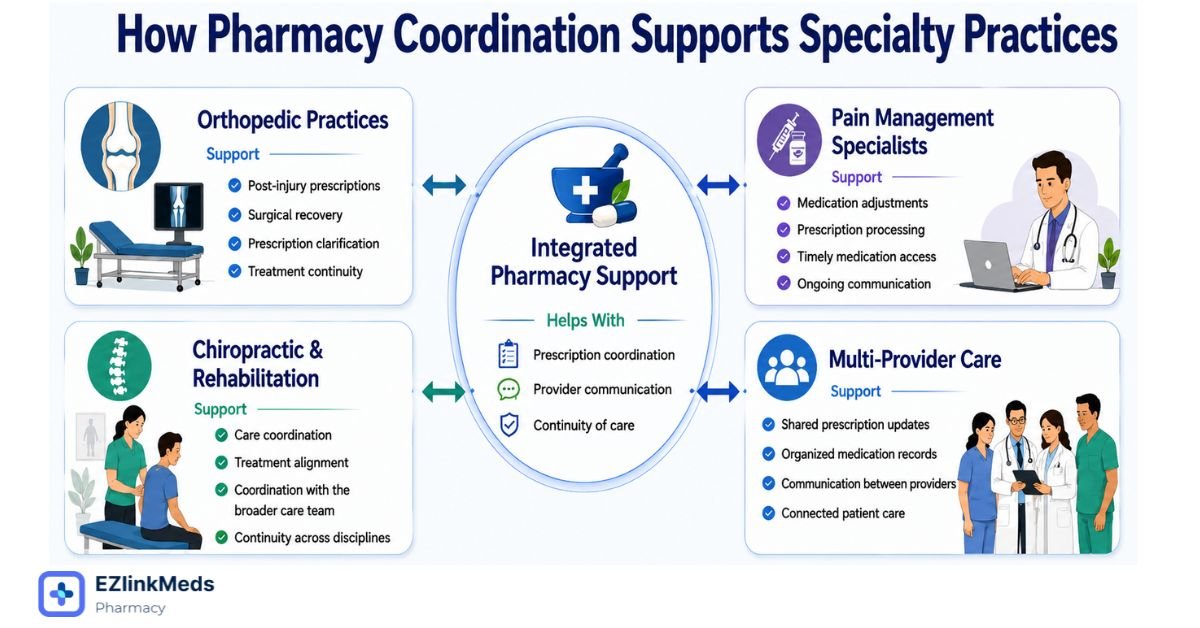
Orthopedic Practice Pharmacy Coordination
Orthopedic providers frequently prescribe medications following fractures, joint injuries, sports injuries, and surgical procedures.
Effective orthopedic practice pharmacy coordination helps ensure prescriptions are reviewed promptly, supports communication when clarification is needed, and allows providers to remain focused on monitoring healing and adjusting treatment plans rather than managing prescription logistics.
Pain Management Specialist Prescription Support
Pain management providers often adjust medications as recovery progresses. Coordinated pharmacy support can facilitate prescription processing, pharmacist communication, and delivery coordination for eligible prescriptions, helping patients access prescribed medications while reducing unnecessary administrative delays.
Chiropractic and Rehabilitation Clinics
Chiropractic and rehabilitation providers may participate in a patient’s broader recovery plan alongside physicians and other licensed prescribers. Although their role differs from that of prescribing providers, appropriate communication among authorized members of a multidisciplinary care team can help keep treatment information organized as the patient progresses through recovery.
Multi-Provider Care Coordination
Many personal injury patients receive care from several healthcare professionals at the same time. Physicians, orthopedic specialists, pain management providers, rehabilitation clinics, pharmacies, and authorized care team members each contribute important information throughout recovery.
Coordinated communication and organized prescription management help keep every provider informed, supporting a more connected treatment experience from the initial evaluation through follow-up care.
Strengthening Continuity of Care Through Coordinated Prescription Support
Continuity of care depends on patients receiving prescribed medications without unnecessary interruptions while healthcare providers remain informed throughout the treatment process. Coordinated prescription support helps connect each stage of medication management, allowing prescriptions to move efficiently from the provider to the patient while supporting consistent communication across the care team.
As treatment plans evolve, prescription updates can be communicated promptly between pharmacies and licensed prescribers when clarification or changes are needed.
This coordinated approach helps ensure patients continue receiving medications that reflect their current treatment plan while reducing delays associated with fragmented communication.
Ongoing follow-up support also contributes to a smoother recovery experience. By maintaining open communication, assisting with prescription-related questions, and coordinating future medication needs, integrated pharmacy services help support uninterrupted medication access and strengthen coordinated care throughout every stage of recovery.
How EZlinkMeds Supports Physicians, Clinics, and Specialists
EZlinkMeds works with healthcare providers to simplify prescription coordination while supporting continuity of care throughout the treatment process. From prescription review through medication fulfillment, the pharmacy helps keep communication organized so physicians and clinical staff can remain focused on patient care.
As part of the dispensing process, prescriptions are reviewed in accordance with applicable pharmacy requirements, and pharmacists may communicate with licensed prescribers when clarification or other prescription-related communication is needed. This coordinated review process is performed in accordance with applicable California pharmacy laws and professional standards. Pharmacist consultation is also available to help address medication-related questions and support safe, efficient prescription management.
EZlinkMeds maintains organized prescription documentation and coordinates communication throughout the fulfillment process to help practices stay informed. The pharmacy maintains prescription-related records in accordance with applicable California pharmacy recordkeeping requirements, helping support organized documentation throughout the patient’s course of care. For eligible patients and service areas, same-day or next-day prescription delivery may be available, improving medication access while reducing unnecessary delays.
EZlinkMeds may assist physicians, orthopedic practices, pain management specialists, chiropractors, case managers, and authorized care teams throughout Los Angeles, Glendale, Burbank, Pasadena, Long Beach, Santa Clarita, Thousand Oaks, Westlake Village, Oxnard, and Ventura, providing coordinated prescription support that complements the broader healthcare network.
Standard Prescription Fulfillment vs. Integrated Personal Injury Pharmacy Coordination
Both traditional pharmacies and integrated prescription logistics support medication access, but they differ in how they communicate with healthcare providers and coordinate the prescription process. While a traditional workflow often focuses on dispensing medications, an integrated approach emphasizes ongoing collaboration between pharmacies, physicians, specialists, and authorized care teams throughout the patient’s treatment.
How Traditional Pharmacy Workflows Compare With Integrated Prescription Logistics |
||
|---|---|---|
| Area | Standard Prescription Fulfillment | Integrated Personal Injury Pharmacy Coordination |
| Communication | Communication focuses on the prescription and the patient’s pharmacy needs | Communication may also incorporate authorized case-related coordination |
| Prescription Coordination | Prescriptions are processed according to the pharmacy’s standard workflow | Prescription processing may be coordinated with additional personal injury case requirements |
| Documentation | Pharmacy records document prescription and dispensing activity | Prescription-related records may also be organized for authorized case-related requests |
| Provider Support | Pharmacists communicate with prescribers as clinically or operationally necessary | A specialized workflow may provide an additional point of contact for personal injury prescription coordination |
| Patient Experience | Access depends on the pharmacy’s standard dispensing, payment, pickup, and delivery options | Eligible patients may have access to additional delivery or billing arrangements, depending on availability and applicable terms |
An integrated prescription logistics model extends beyond medication dispensing by connecting healthcare providers, pharmacies, and patients through a more coordinated process.
This collaborative approach helps improve communication, supports continuity of care, and allows clinical teams to spend more time focused on patient treatment rather than prescription logistics.
Conclusion
Coordinated prescription logistics play an important role in helping healthcare teams maintain continuity of care while reducing the administrative demands associated with medication management. Clear communication, efficient prescription coordination, and reliable patient access all contribute to a more connected treatment experience for providers and patients alike.
EZlinkMeds supports physicians, orthopedic practices, pain management clinics, chiropractors, and case managers throughout Southern California with coordinated prescription review, pharmacist communication, medication fulfillment, and delivery services. Connect with the EZlinkMeds team to simplify prescription logistics and support coordinated patient care.