

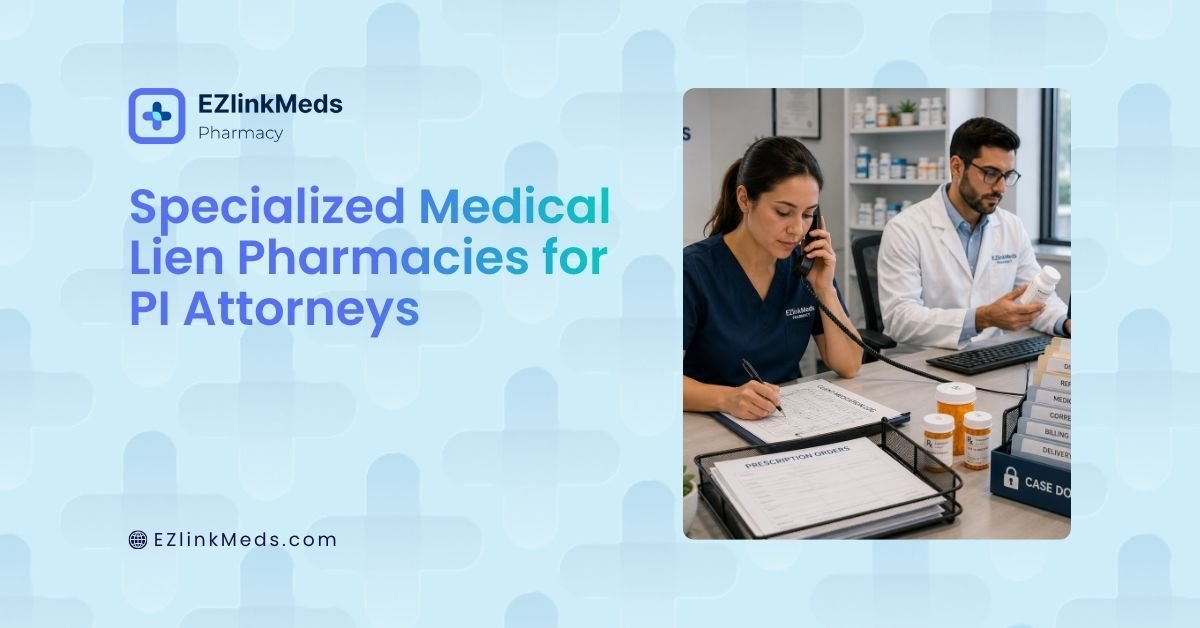
For personal injury law firms, prescription management is about more than helping clients obtain medications. It also involves keeping pharmacy records organized, reducing administrative work, and maintaining clear documentation throughout the life of a case.
When prescription information is scattered across multiple retail pharmacies, legal teams may spend unnecessary time tracking records and verifying billing information.
A specialized medical lien pharmacy can help simplify these tasks by providing centralized prescription records, itemized billing, and dedicated communication for personal injury cases. For attorneys and case managers across Southern California, working with a personal injury pharmacy may help streamline prescription management while supporting consistent documentation for clients throughout their recovery.
In this context, “medical lien pharmacy” refers to a pharmacy that may dispense eligible prescriptions under a written billing arrangement connected to a personal injury matter. The agreement’s terms, including payment responsibilities if no recovery is obtained, depend on the specific arrangement and should be reviewed by the parties involved.
Key takeaway
- Specialized medical lien pharmacies help personal injury law firms streamline prescription-related communication, documentation, and record management throughout a case.
- Centralized pharmacy records, itemized billing statements, and organized prescription histories can reduce administrative work for attorneys and case managers.
- Unlike traditional retail pharmacies, specialized personal injury pharmacies are structured to support injury-related prescription management and ongoing communication with authorized parties.
- EZlinkMeds may assist law firms, healthcare providers, and injured patients across Southern California with prescription-related services, organized pharmacy records, and delivery options where available for eligible prescriptions and locations.
Why Law Firms Need More Than a Traditional Retail Pharmacy
A specialized personal injury pharmacy provides more than prescription dispensing. It may offer centralized documentation, consistent communication, and prescription-related support that helps law firms manage client files more efficiently while maintaining continuity throughout a client’s treatment.
For personal injury attorneys and case managers, prescription management often involves obtaining pharmacy records, reviewing itemized billing statements, and responding to documentation requests. A traditional retail pharmacy is generally structured around routine consumer dispensing, while a specialized medical lien pharmacy may offer additional documentation and communication processes developed for personal injury matters.
With organized prescription records and dedicated communication, legal teams can spend less time tracking pharmacy information and more time focusing on case management and client support.
These localized pharmacy coordination and documentation processes form part of a broader med-legal prescription delivery system that can help law firms manage prescription-related operations more consistently across Southern California. Learn more in our guide to med-legal prescription delivery for attorneys and healthcare providers.
Where Traditional Retail Pharmacies Create Administrative Challenges
Managing pharmacy records for a personal injury case can involve more than confirming that a prescription was filled. Here are several operational challenges that may increase the administrative workload for attorneys and case managers.
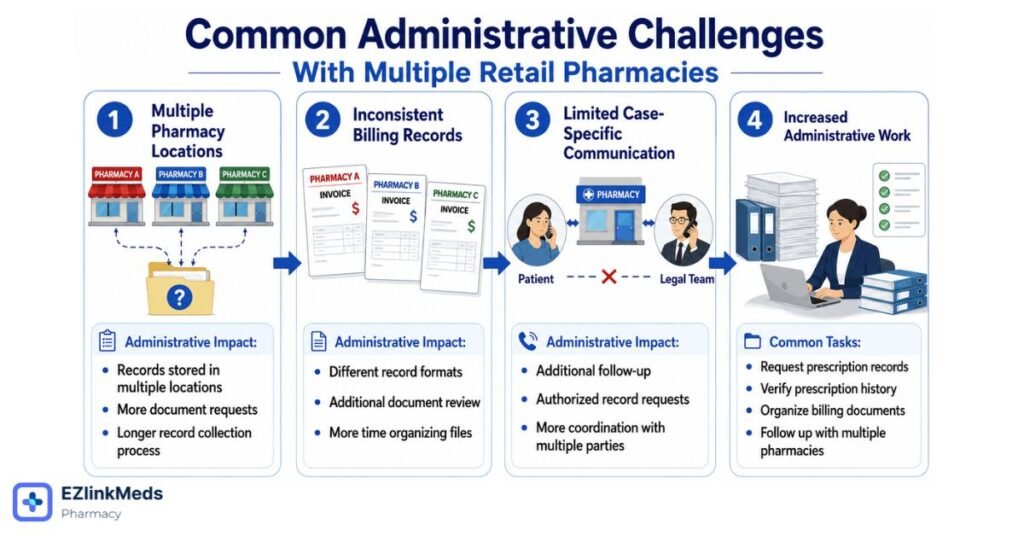
Multiple Pharmacy Locations
Clients may fill different prescriptions at different pharmacy locations throughout their recovery. Gathering records from multiple providers can make it more time-consuming for case managers to assemble complete pharmacy documentation.
Inconsistent Billing Records
Billing statements and prescription records can vary from one pharmacy to another. Reviewing and organizing these documents may require additional administrative effort.
Limited Case-Specific Communication
Retail pharmacies typically communicate directly with patients about their prescriptions but may not routinely support the case-related communication needs of attorneys or case managers.
Additional follow-up may be required when prescription information or billing records are requested with appropriate authorization.
Extra Administrative Work for Legal Staff
When prescription records are spread across multiple pharmacies, legal staff may spend additional time requesting documents, organizing billing records, verifying prescription histories, and following up with different pharmacy locations.
Consolidated pharmacy support can help simplify these administrative tasks throughout the life of a case.
What Makes a Specialized Medical Lien Pharmacy Different
A specialized medical lien pharmacy is designed to support the unique operational needs of personal injury cases. Rather than focusing solely on dispensing medications, these pharmacies may provide services that help attorneys, case managers, healthcare providers, and patients manage prescription-related information more efficiently throughout a case.
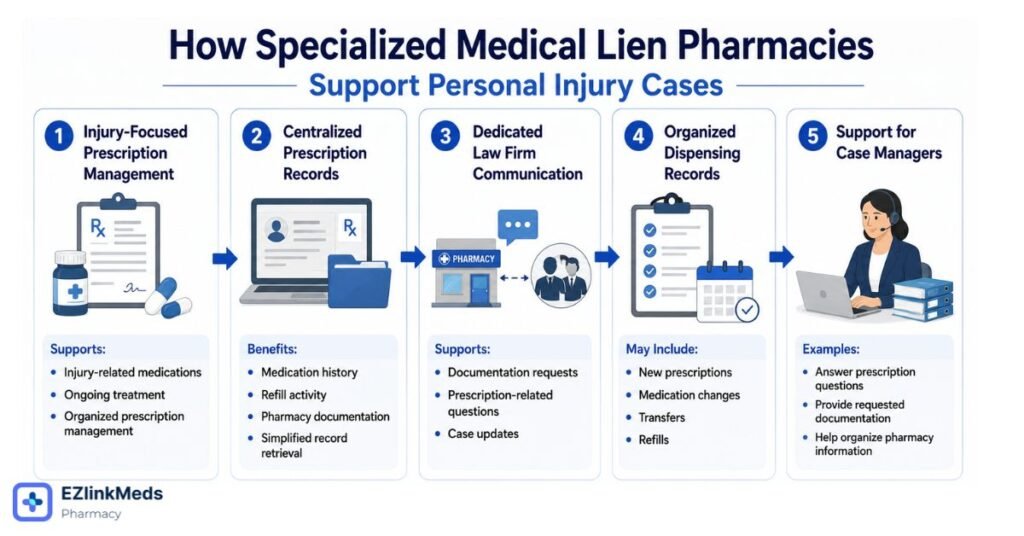
Injury-Focused Prescription Management
Specialized pharmacies work with injury-related prescriptions from treating providers and help keep prescription information organized throughout the course of a client’s recovery.
Centralized Prescription Records
Maintaining prescription records in one place can simplify the process of reviewing medication histories, refill activity, and pharmacy documentation.
Rather than gathering information from multiple pharmacy locations, legal teams may be able to access more organized prescription records when they are needed.
Dedicated Law Firm Communication
With the appropriate patient authorization or another applicable legal basis, specialized pharmacies may communicate directly with attorneys and case managers regarding prescription-related questions, documentation requests, or updates.
This centralized communication can reduce unnecessary back-and-forth and help streamline case management.
Organized Dispensing Records Throughout the Case
As prescriptions are received, changed, transferred, or refilled, the pharmacy’s dispensing records can be maintained in an organized manner. With appropriate authorization or another applicable legal basis, legal teams may request relevant records without relying on documents from several unrelated pharmacy locations.
Pharmacy Support for Case Managers
Case managers often coordinate with healthcare providers, clients, and pharmacies throughout a claim.
A specialized medical lien pharmacy may assist by answering prescription-related questions, providing requested documentation, and helping organize pharmacy information needed during case management.
Keeping Injury-Related Pharmacy Records Separate From Everyday Prescriptions
In personal injury cases, keeping injury-related prescription records organized and distinct from routine, non-injury medications can make pharmacy documentation easier to review throughout the course of a claim.
While many patients take medications for ongoing health conditions, prescriptions related to an accident may be easier to identify when they are documented in a clear and consistent manner.
Maintaining organized pharmacy records may include keeping an accurate prescription history, itemized billing statements, fill and refill dates, and other prescription-related documentation associated with injury treatment. This can help attorneys, case managers, healthcare providers, and patients quickly locate the information they need without sorting through unrelated prescription records.
When appropriate authorization or another applicable legal basis exists, a specialized medical lien pharmacy may provide organized pharmacy documentation that focuses on injury-related prescriptions.
Keeping these records separate from everyday medications can simplify administrative review and help maintain a clear pharmacy record throughout the patient’s treatment.
Information Law Firms Commonly Need During a Case
Prescription-related information is often requested at different stages of a personal injury case. Keeping these records organized can make it easier to review pharmacy documentation and respond to requests when needed.
- Current prescription list showing the injury-related prescriptions currently on file or medications dispensed by the pharmacy.
- Prescription fill history documenting when medications were dispensed during the course of treatment.
- Refill history to help track ongoing prescription activity and medication changes.
- Itemized billing statements listing prescription-related charges in a clear and organized format.
- Pharmacy contact information for obtaining authorized records or addressing prescription-related questions.
- Prescription status updates confirming whether a prescription has been received, processed, dispensed, or requires additional information before it can be completed.
How Specialized Pharmacy Communication Can Save Administrative Time
Clear communication can help reduce the administrative workload associated with managing prescription-related information during a personal injury case. Rather than contacting multiple pharmacy locations, legal teams may benefit from a more centralized approach to documentation and communication.
With the appropriate patient authorization or another applicable legal basis, a specialized medical lien pharmacy may respond to prescription-related questions, provide organized documentation, and serve as a consistent point of contact for attorneys and case managers.
This can help reduce follow-up calls, simplify record requests, and make prescription information easier to access throughout the case.
This communication structure is one part of a broader approach to coordinating pharmacy services with law firms and healthcare providers. See our legal partner blueprint for lien-based pharmacy services for a wider overview of that relationship.
Supporting Clients Throughout Recovery

Recovery often extends over weeks or months, and prescription needs may change as treatment progresses. A specialized personal injury pharmacy can provide ongoing support that helps reduce common barriers to medication access while supporting continuity throughout the patient’s course of care.
Beyond dispensing medications, pharmacists may answer prescription-related questions, explain medication instructions, and communicate with patients if clarification is needed.
As healthcare providers adjust treatment plans, prescribe new medications, or update existing prescriptions, the pharmacy can help ensure patients receive clear information about their medications and any prescription-related services that may be available.
For attorneys and case managers, consistent pharmacy support may also contribute to more organized prescription records throughout the client’s recovery.
Clear communication, ongoing prescription assistance, and continuity in pharmacy services can help simplify prescription management for both legal teams and the patients they represent.
How EZlinkMeds Works With Personal Injury Law Firms Across Southern California
EZlinkMeds may support personal injury law firms with prescription-related communication and documentation, subject to patient authorization, pharmacy requirements, and the services available for the individual matter.
Depending on the services available for the individual matter, EZlinkMeds may provide a centralized point of contact that helps case managers request authorized prescription information and receive relevant updates as treatment progresses.
Support may include:
- Communication with case managers regarding prescription-related questions, when appropriate.
- Review of prescription requests to identify information that may be needed before processing can continue.
- Organized pharmacy records that can be provided with appropriate patient authorization or another applicable legal basis.
- Medication-related guidance from the pharmacy team when prescription questions arise.
- Delivery discussions, including available options for eligible prescriptions within eligible delivery areas.
EZlinkMeds may be able to assist law firms, healthcare providers, and injured patients in Los Angeles, Glendale, Burbank, Pasadena, Long Beach, Santa Clarita, Thousand Oaks, Westlake Village, Oxnard, Ventura, and nearby communities, subject to pharmacy requirements and service availability.
Retail Pharmacy vs. Specialized Medical Lien Pharmacy: Operational Comparison
The way a pharmacy manages prescription-related communication and documentation can affect how efficiently a law firm handles case administration.
The table below highlights some of the operational differences between a traditional retail pharmacy and a specialized medical lien pharmacy in the context of personal injury cases.
Operational Comparison: Retail Pharmacy vs. Specialized Medical Lien Pharmacy |
||
|---|---|---|
| Feature | Retail Pharmacy | Specialized Medical Lien Pharmacy |
| Injury-Focused Records | Records may include both injury-related and unrelated prescriptions dispensed by that pharmacy. | The pharmacy may organize records associated with identified injury-related prescriptions. |
| Case Communication | Communication generally focuses on routine prescription matters involving the patient. | May communicate with attorneys or case managers when appropriate authorization or another applicable legal basis exists. |
| Itemized Billing | Record formats and request procedures may differ among pharmacy organizations or locations. | Itemized records may be available in a format developed for the pharmacy’s personal injury accounts. |
| Dispensing Records | Records reflect prescriptions handled by the relevant pharmacy location or organization. | Records for prescriptions handled by the specialized pharmacy may be maintained through one point of contact. |
| Pharmacy Contact | Legal teams may need to contact separate pharmacy locations or records departments. | A centralized contact may help simplify authorized prescription and documentation inquiries. |
| Patient Support | Provides routine dispensing, pharmacist consultation, and other pharmacy services. | May provide injury-focused administrative support in addition to standard pharmacy services. |
Conclusion
Efficient prescription management can play an important role in helping personal injury law firms keep cases organized while supporting clients throughout their recovery. Working with a specialized medical lien pharmacy may simplify prescription-related communication, provide more organized pharmacy records, and reduce the administrative effort involved in managing injury-related medications.
Schedule a conversation with EZlinkMeds to learn how our pharmacy services can support your firm, your clients, and your healthcare partners throughout the prescription management process.