

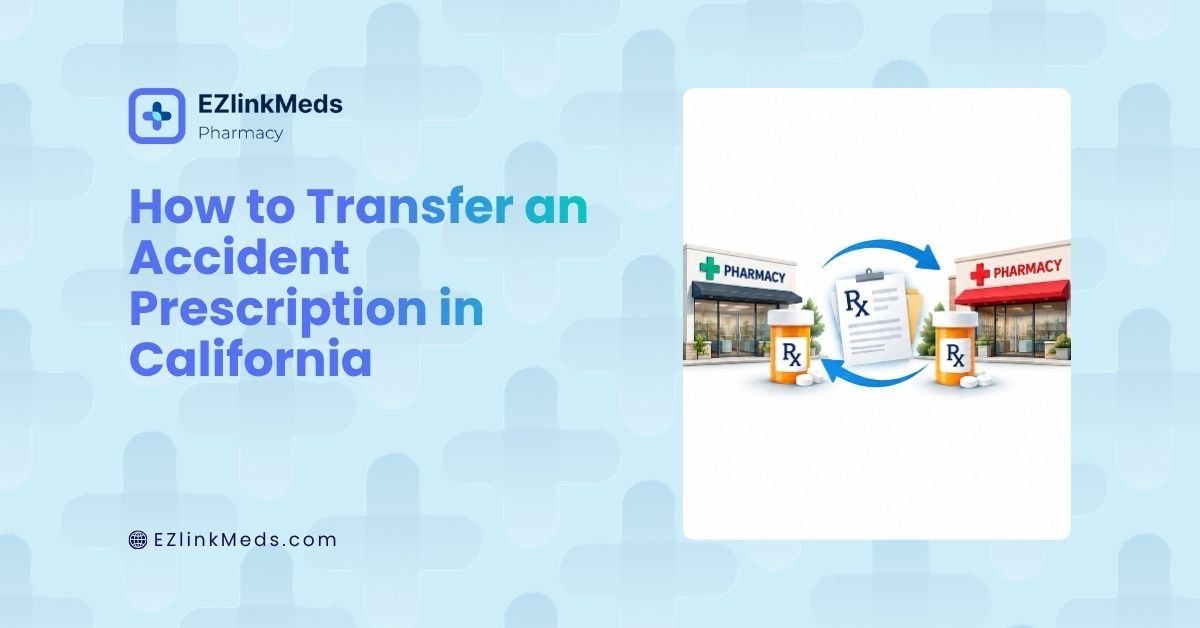
Many accident-related prescriptions can be transferred to a new pharmacy, but the process depends on the prescription. Whether it is unfilled or has remaining refills, controlled or non-controlled, and electronic can affect the transfer pathway.
The receiving pharmacy must still determine whether the prescription can be transferred and lawfully filled under applicable requirements.
For personal injury patients, there is also a separate administrative step. Transferring the prescription does not automatically transfer a pharmacy lien, billing arrangement, delivery setup, or case records. The new pharmacy may need additional case and billing information before establishing a personal-injury payment arrangement.
Key takeaway
- Many accident-related prescriptions can be transferred, but the process depends on whether the prescription is unfilled or refillable, controlled or non-controlled, and electronic or another permitted format.
- For an unfilled electronic prescription, California law provides a pathway for the patient or an authorized requester to have the prescription transferred or forwarded to another designated pharmacy, subject to applicable law.
- Controlled substances have additional requirements. Federal rules allow certain unfilled electronic Schedule II-V prescriptions to be transferred once between DEA-registered retail pharmacies when the applicable conditions are met.
- Transferring the prescription does not automatically transfer a personal-injury lien, deferred-payment agreement, or case billing setup. The new pharmacy may need separate case information and documentation before establishing that arrangement.
Can you transfer an accident-related prescription to a new pharmacy?
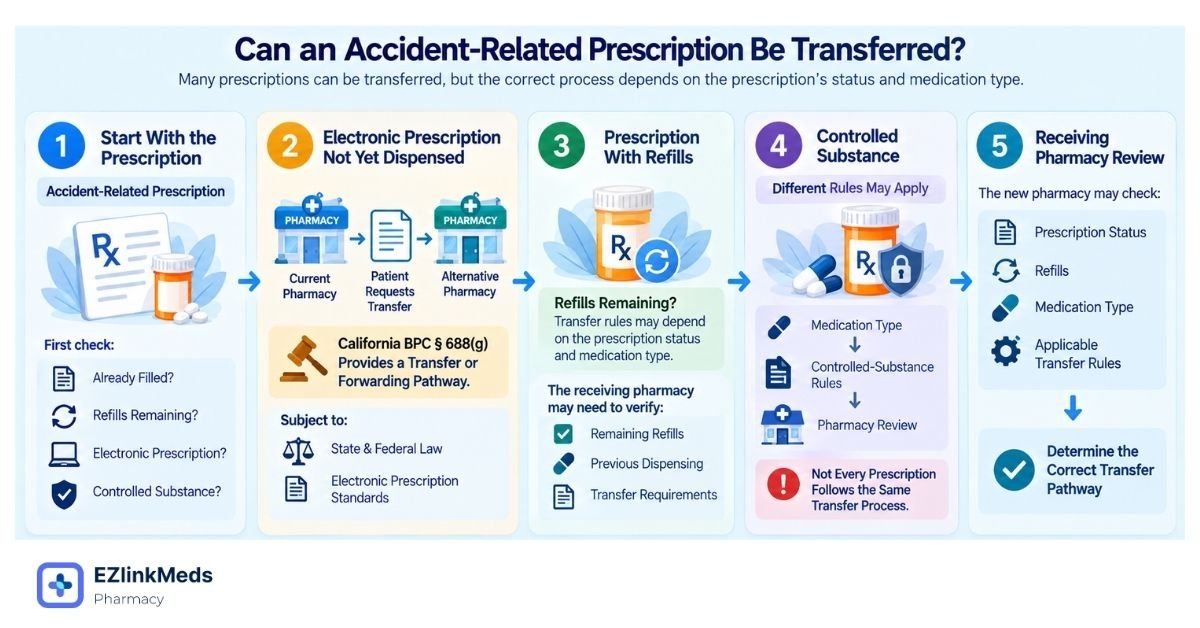
Often, yes. Many accident-related prescriptions can be moved to another pharmacy, but the correct transfer process depends on the prescription itself. Important factors include whether it has already been filled, whether refills remain, whether it was issued electronically, and whether the medication is a controlled substance.
For example, California Business and Professions Code § 688(g) provides a transfer or forwarding pathway for an electronic prescription that a pharmacy has received but not yet dispensed.
At the request of the patient or an authorized requester, the pharmacy must transfer or forward the prescription to an alternative pharmacy designated by the requester, unless the transfer would violate state or federal law or is not supported by the applicable electronic prescription standard.
Refill transfers and controlled-substance prescriptions can follow different rules, so a patient should not assume that every prescription can be moved in the same way. The receiving pharmacy may need to review the prescription status, remaining refills, medication type, and applicable transfer requirements before determining the correct pathway.
The fact that medication was prescribed after a car accident or another personal injury does not itself determine whether it can be transferred. The accident creates the case context, while the prescription’s status and applicable pharmacy rules determine the transfer process.
What information does the new pharmacy need before starting the transfer?
Having the right information ready can help the receiving pharmacy determine which transfer pathway applies and whether anything else is needed from the prior pharmacy or prescriber.
Before You Ask for the Transfer
Prepare:
- New pharmacy information: Know which pharmacy you want to receive the prescription.
- Current pharmacy information: Provide the name and contact information for the pharmacy currently holding or filling the prescription.
- Medication information: Have the medication name, strength, directions, and prescription number available if possible.
- Prescriber information: Provide the prescriber’s name and contact information.
- Patient information: Be ready to confirm identifying and contact information requested by the receiving pharmacy.
- Remaining refills: If the prescription has already been filled, check whether authorized refills remain.
- Controlled-substance status: Tell the pharmacy if you know the medication is controlled. Different transfer requirements may apply.
- Personal-injury case contacts: When a case-related billing arrangement is requested, provide the attorney, case manager, or other relevant billing contact information the new pharmacy requests.
- Delivery information: If you plan to request prescription delivery, have your delivery address available. Delivery eligibility and timing must be confirmed separately with the receiving pharmacy.
Providing this information does not guarantee that the prescription can be transferred or filled. The receiving pharmacy may still need to verify the prescription, available refills, medication requirements, and other dispensing conditions.
Personal-injury billing should also be handled separately. Even when the prescription itself can be transferred, the new pharmacy may need additional case information or documentation before accepting a lien or other deferred-payment arrangement.
How are non-controlled prescriptions transferred in California?
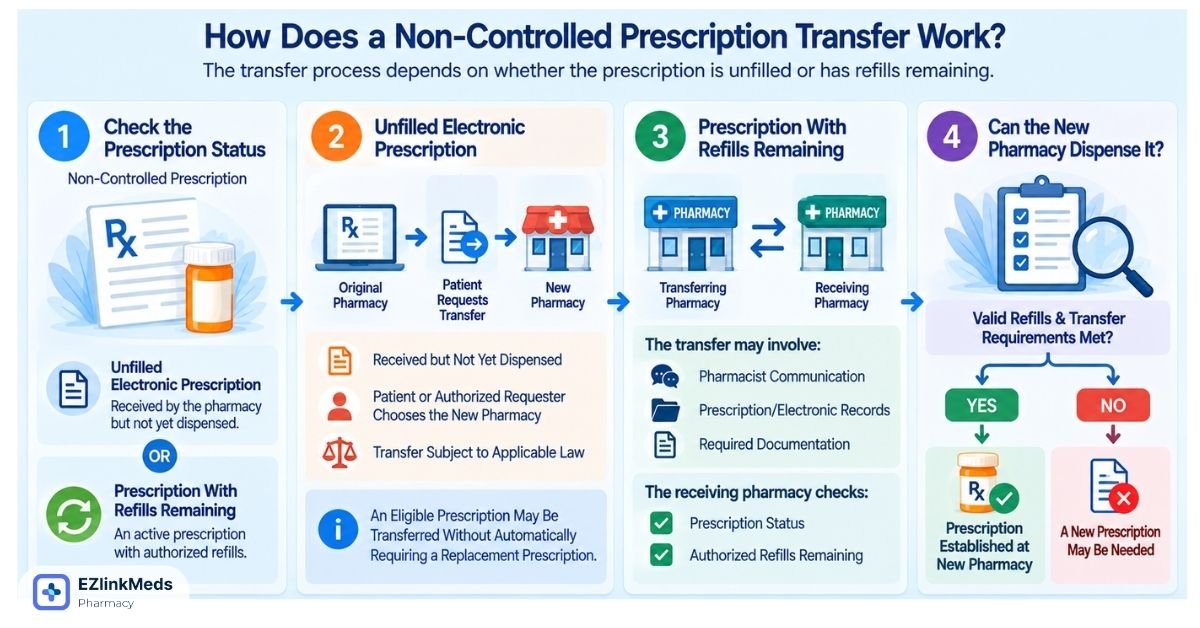
The transfer process for a non-controlled medication depends partly on whether the prescription is still unfilled or has already been dispensed and has refills remaining.
Unfilled Electronic Prescriptions
California Business and Professions Code § 688(g) provides a pathway for an electronic prescription that has been received by a pharmacy but not yet dispensed. At the request of the patient or an authorized requester, the pharmacy must transfer or forward the prescription to an alternative pharmacy designated by the requester, subject to applicable law.
This means a patient does not necessarily need to ask the prescriber for a replacement prescription simply because an eligible unfilled electronic prescription was initially sent to a different pharmacy.
Prescriptions With Refills Remaining
For non-controlled prescriptions with authorized refills remaining, California regulations permit prescription information to be transferred between pharmacies.
The transfer may occur through direct communication between pharmacists or through the receiving pharmacist’s access to prescription or electronic files created or verified by a pharmacist at the transferring pharmacy. The required transfer information must also be documented.
The receiving pharmacy will need to determine the prescription’s status and remaining authorized refills before dispensing. If no valid refills remain or another issue prevents transfer, the prescriber may need to provide a new prescription. Once the prescription is established at the receiving pharmacy, see how prescription refills work during an active personal injury case for ongoing refill questions.
A personal injury prescription transfer follows these same pharmacy requirements. The fact that the medication relates to an accident does not remove the usual transfer, documentation, or dispensing requirements. For more context on what happens before and after this step, see how accident prescriptions are filled from prescriber to pharmacy to patient.
What Changes if the Accident Medication Is a Controlled Substance?
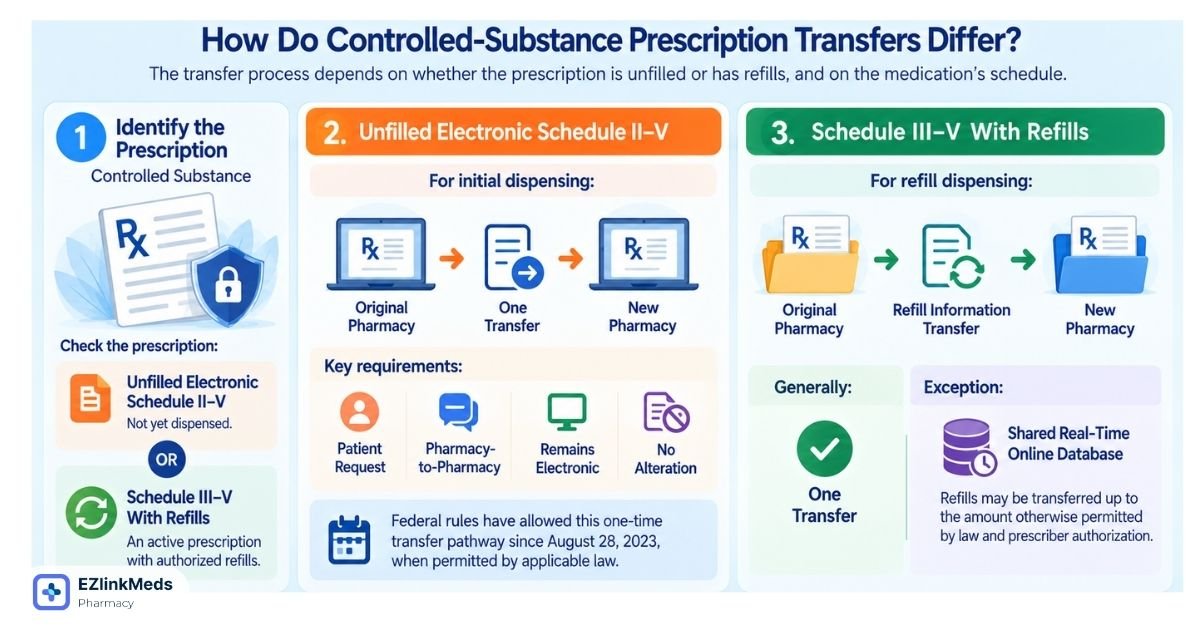
Controlled substances have additional transfer requirements, so the process may differ from transferring a non-controlled medication. The pharmacy must consider both California requirements and applicable federal controlled-substance rules.
Unfilled Electronic Schedule II-V Prescriptions
Since August 28, 2023, federal rules have allowed an unfilled electronic prescription for a Schedule II-V controlled substance to be transferred once between DEA-registered retail pharmacies for initial dispensing at the patient’s request, provided applicable state and federal requirements are met.
The prescription must remain electronic, cannot be altered during the transfer, and must be transferred directly between licensed pharmacists. This means the old blanket statement that an unfilled electronic Schedule II prescription can never be transferred is no longer accurate.
Schedule III-V Prescriptions With Refills
Refill transfers for Schedule III-V medications follow a separate federal and California framework. For refill dispensing, federal rules generally permit the prescription information to be transferred between pharmacies one time.
Pharmacies electronically sharing a real-time, online database may transfer refills up to the maximum permitted by law and the prescriber’s authorization. This should not be confused with the separate federal rule governing the one-time transfer of an unfilled electronic Schedule II-V prescription for initial dispensing.
A permitted transfer does not guarantee dispensing. The receiving pharmacist must still evaluate the prescription under applicable federal and California requirements, including corresponding responsibility for controlled-substance prescriptions. The pharmacist may need to resolve questions with the prescriber before dispensing.
Does the personal-injury lien or billing arrangement transfer with the prescription?
No automatic transfer should be assumed. Moving a prescription to a new pharmacy and establishing a personal-injury lien or deferred-payment arrangement are separate processes.
The prescription transfer concerns the pharmacy’s authority to receive and potentially dispense the medication. A personal-injury payment arrangement concerns how pharmacy charges will be handled in connection with the patient’s case.
Before using a case-related payment arrangement, the receiving pharmacy may need information such as:
- Patient and personal-injury case details
- Attorney or case manager contact information, where applicable
- Prescriber information
- A signed lien or deferred-payment agreement
- Other billing or authorization documents required under the pharmacy’s current process
A lien or billing agreement signed with the previous pharmacy should not be assumed to follow the prescription automatically. The receiving pharmacy must separately determine whether it can accept the case and what documentation or agreement is required.
For a broader explanation of the financial arrangement, see how prescription liens work after an accident in California. For the setup paperwork, see what documents are needed to set up a prescription lien?
When might the prescriber need to send a new prescription instead?
Not every accident-related prescription can be transferred to another pharmacy. In some situations, the receiving pharmacy may need a new prescription from the prescriber instead.
That may happen when:
- No authorized refills remain: A refill transfer cannot create additional refills beyond those authorized by the prescriber.
- The prescription is no longer valid: An expired or otherwise invalid prescription cannot be made usable simply by transferring it.
- The medication order needs to change: A change in the drug, strength, directions, dosage form, or quantity may require a new prescription from the prescriber.
- The applicable transfer requirements cannot be met: Certain controlled-substance prescriptions and prescription formats are subject to additional transfer restrictions.
- The pharmacy cannot complete the permitted transfer: The transferring and receiving pharmacies must be able to satisfy the applicable legal and technical requirements for the transfer.
For controlled substances, the receiving pharmacist must still determine whether the prescription can lawfully be filled. If a transfer cannot be completed, the patient can ask the pharmacy what is needed from the prescriber rather than changing or rationing prescribed medication on their own.
How to Switch Pharmacies Without Creating an Avoidable Medication Delay
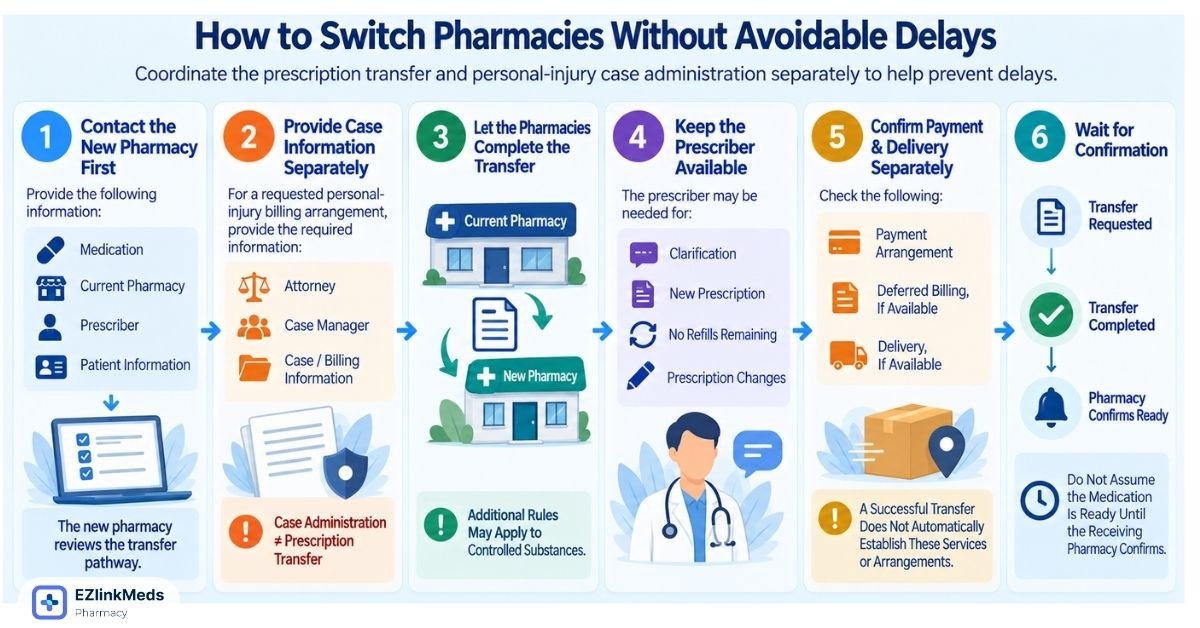
A pharmacy switch can involve both prescription-transfer requirements and personal-injury case administration. Starting with the receiving pharmacy can help identify what is needed before the transition moves forward.
Contact the New Pharmacy First
Provide the medication, current pharmacy, prescriber, and patient information needed to review the transfer request. The receiving pharmacy can then determine which transfer pathway may apply.
Provide Personal-Injury Case Contacts Separately
If you are requesting a personal-injury billing arrangement, provide the attorney, case manager, or other case information the pharmacy requires. This administrative setup is separate from transferring the prescription.
Allow the Pharmacies to Complete the Transfer
When a transfer is permitted, the receiving and transferring pharmacies can complete the required pharmacy-to-pharmacy steps. Additional requirements may apply to controlled substances.
Keep the Prescriber Available
The receiving pharmacy may need clarification or a new prescription if the existing prescription cannot be transferred, has no remaining refills, or needs to be changed.
Confirm Payment and Delivery Arrangements Separately
A successful prescription transfer does not automatically establish a lien, deferred-payment arrangement, or delivery service. Confirm these details separately with the receiving pharmacy.
Wait for the Receiving Pharmacy to Confirm Readiness
Do not assume the medication is ready simply because a transfer was requested. Wait for the receiving pharmacy to confirm that the transfer has been completed and the prescription can be filled.
Patients or authorized case contacts interested in transferring an accident-related prescription to EZlinkMeds can provide the current pharmacy, prescription and prescriber information, patient contact details, and applicable case or billing contacts so the pharmacy can review the appropriate transfer pathway.
Conclusion
Transferring an accident-related prescription can be straightforward, but the correct process depends on the prescription’s status, remaining refills, medication type, and applicable transfer rules. Controlled substances may require additional steps, and some situations may require a new prescription from the prescriber.
For personal injury patients, the prescription transfer and the case-related payment arrangement should also be handled separately. Moving the prescription does not automatically move a lien, deferred-payment agreement, or billing setup to the new pharmacy.
Patients or authorized case contacts can provide EZlinkMeds with the current pharmacy, prescription and prescriber information, contact details, and relevant case or billing contacts to begin a transfer review and determine the appropriate next steps.